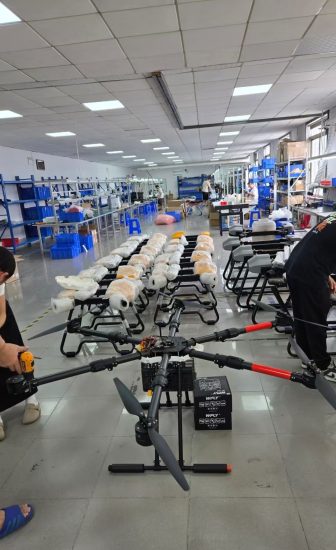


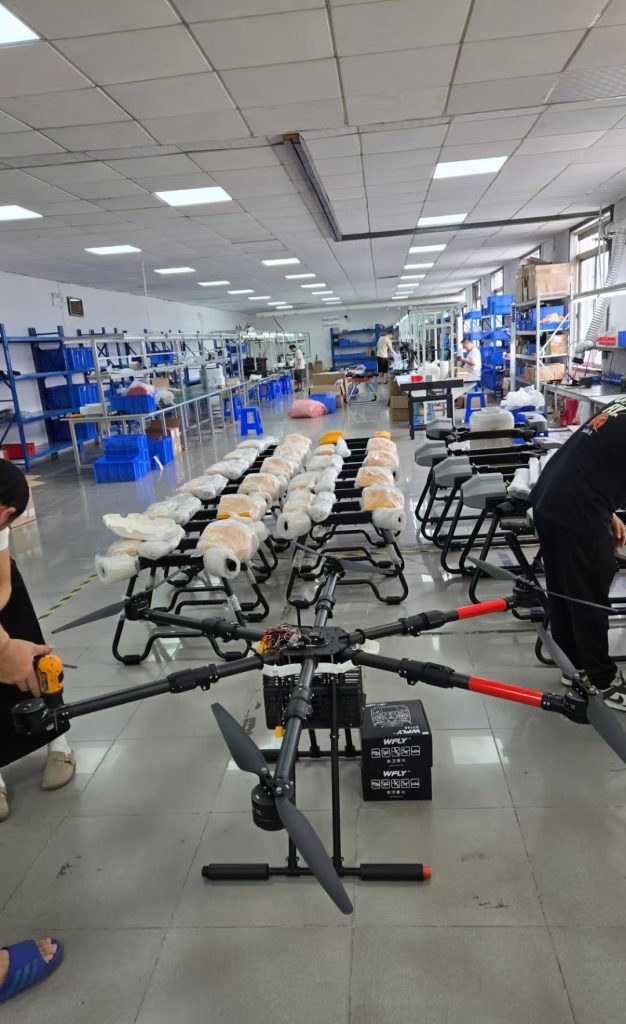
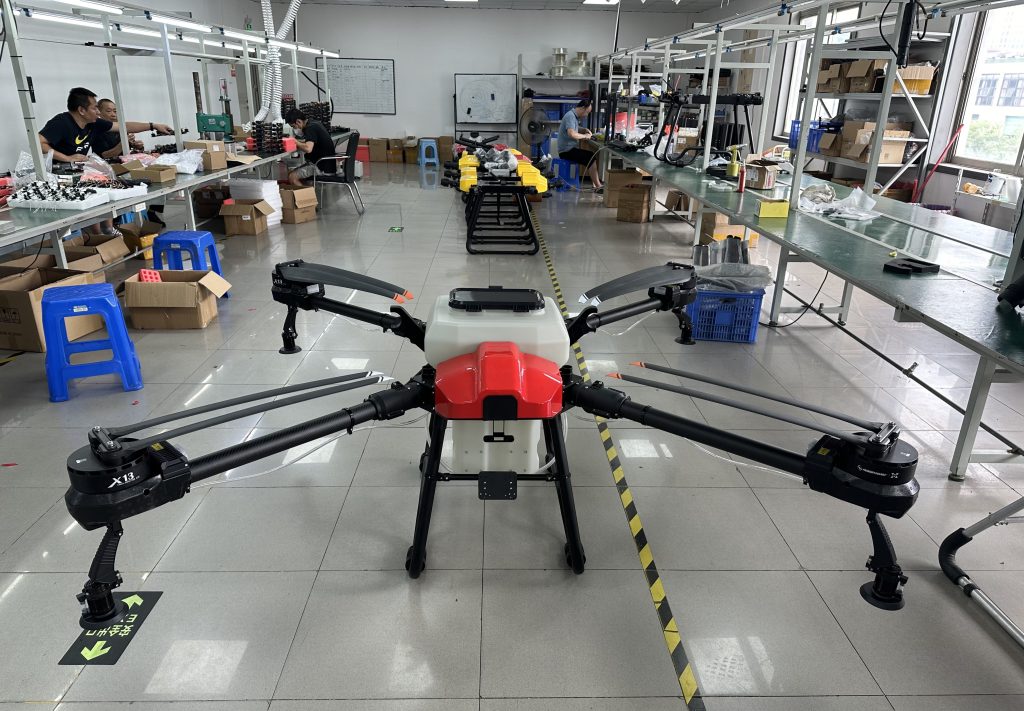
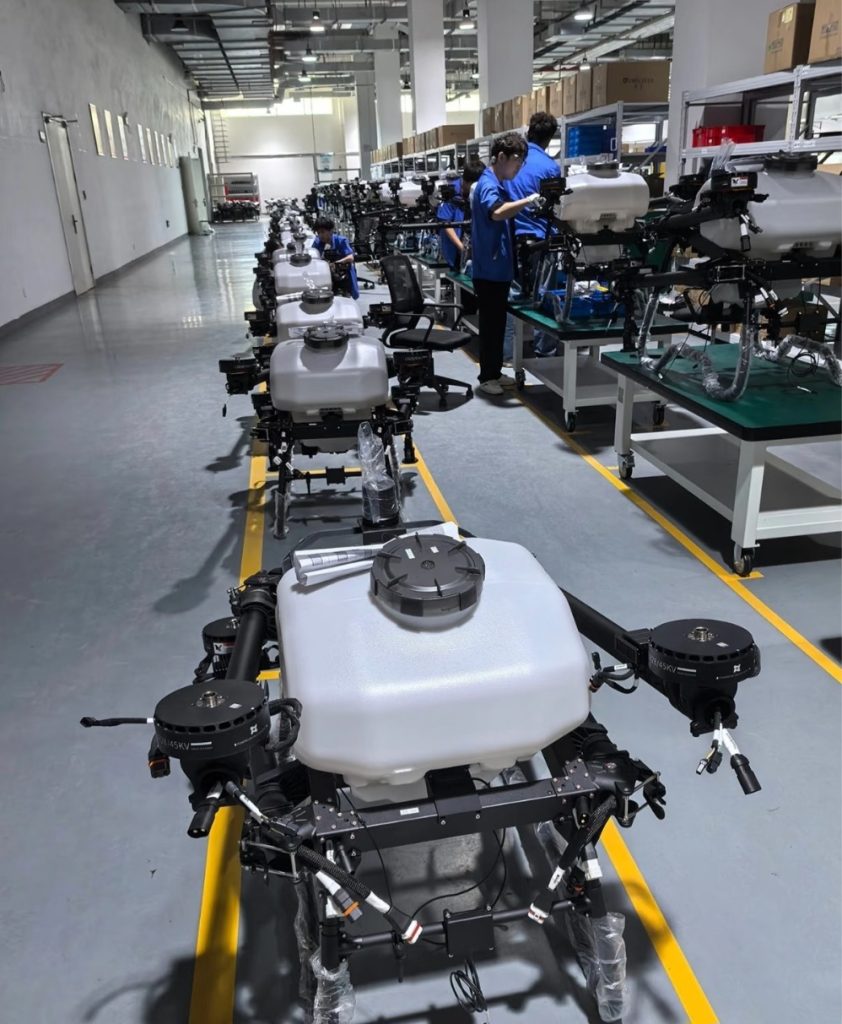
China has become an important manufacturing base for agricultural drones, offering a wide range of spraying, spreading, mapping, and precision-agriculture solutions.
For overseas buyers, importing directly from China can provide competitive factory pricing and access to OEM and private-label manufacturing. However, agricultural drones are more complicated to import than ordinary products because they contain batteries, electronic systems, radio equipment, motors, and specialized agricultural components.
This guide explains how to import agricultural drones from China, including supplier selection, pricing, MOQ, shipping, documentation, quality inspection, customs considerations, and after-sales support.
1. Determine What Type of Agricultural Drone You Need
Before contacting Chinese manufacturers, define your application.
Common agricultural drone categories include:
- Agricultural spraying drones
- Agricultural spreading drones
- Seed spreading drones
- Fertilizer spreading drones
- Crop protection drones
- Agricultural mapping drones
- Multispectral inspection drones
For spraying applications, common payload capacities include 10L, 16L, 20L, and 30L.
Your choice should depend on:
- Farm size
- Crop type
- Terrain
- Required application rate
- Operating hours
- Available labor
- Battery charging capability
- Local regulations
For example, a small farm may not need a 30L drone. A commercial spraying company may benefit from a larger-capacity model.
2. How Much Does It Cost to Import an Agricultural Drone from China?
The factory price is only one part of your total import cost.
Typical factory-level price ranges can be approximately:
| Model | Indicative Factory Price |
|---|---|
| 10L spraying drone | US$2,000–US$4,000 |
| 16L spraying drone | US$3,000–US$5,500 |
| 20L spraying drone | US$4,000–US$7,000 |
| 30L spraying drone | US$6,000–US$10,000+ |
| OEM/ODM model | US$5,000–US$15,000+ |
Actual prices depend on specifications, batteries, charger, RTK, radar, spraying system, remote controller, accessories, customization, and order quantity.
You should calculate the landed cost, not just the factory quotation.
A simple calculation is:
Landed Cost = Product Price + Shipping + Insurance + Customs Duties + Taxes + Clearance + Local Delivery
3. Find a Reliable Agricultural Drone Manufacturer
Finding a supplier is one of the most important steps.
Do not select a factory only because it offers the lowest price.
Check:
Manufacturing Capability
Ask whether the supplier actually manufactures agricultural drones or simply resells products from another factory.
Product Range
A manufacturer with multiple models may be able to offer better technical support and replacement parts.
Testing Capability
Ask whether the company performs:
- Flight testing
- Spray testing
- Battery testing
- Motor testing
- Load testing
- Quality inspection
OEM Capability
If you want your own brand, confirm whether the supplier supports:
- Logo customization
- Packaging
- User manuals
- Product labels
- Product colors
- Software customization
- Accessories
- Private-label production
4. Verify the Chinese Supplier Before Paying
Before placing an order, collect basic company information.
Ask for:
- Registered company name
- Business license
- Factory address
- Product catalog
- Technical specifications
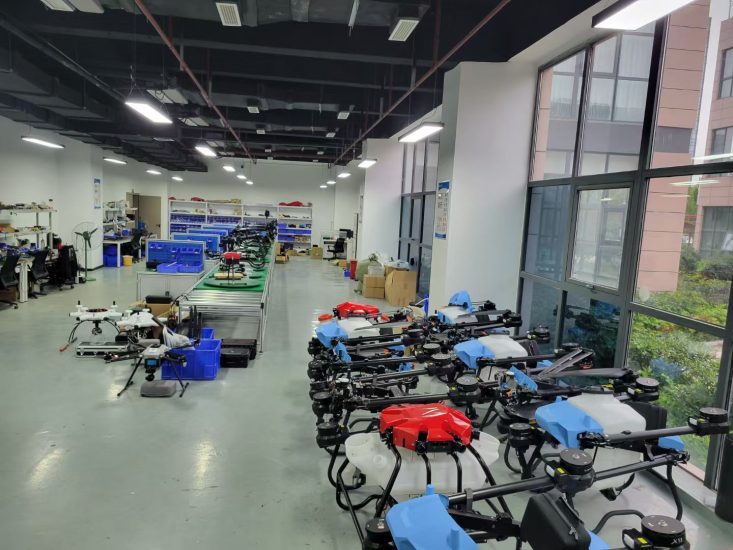
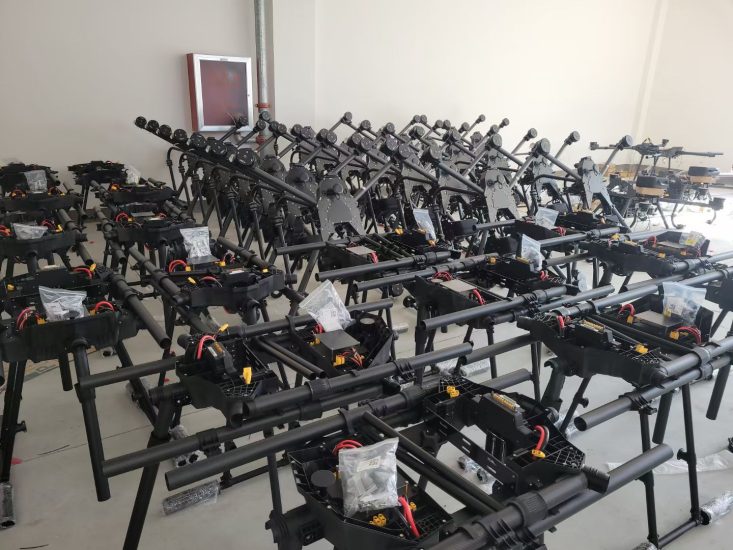
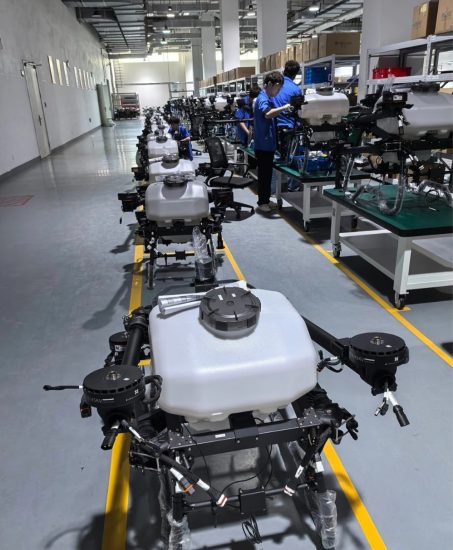
- Factory photos
- Production photos
- Product videos
- Export experience
- Warranty policy
- Reference customers if available
You can also request a live video factory inspection.
During the inspection, ask the supplier to show:
- Production area
- Assembly area
- Testing area
- Finished products
- Spare-parts inventory
- Packaging area
This can help determine whether you are dealing with a manufacturer, trading company, or mixed business.
5. Order a Sample Before a Large Purchase
If you are importing agricultural drones for the first time, ordering a sample is usually safer than immediately purchasing a large quantity.
A sample allows you to evaluate:
- Flight stability
- Spray performance
- Battery endurance
- Remote-control operation
- Navigation
- Pump performance
- Software
- Build quality
- Ease of maintenance
For distributors, testing the sample in your own market is particularly important.
A drone that performs well at the factory may still require adjustments for different crops, weather conditions, operating practices, or local regulations.
6. Understand the Agricultural Drone Specification
Do not purchase based only on the tank capacity.
Important specifications include:
Payload
For example:
- 10L
- 16L
- 20L
- 30L
Flight Time
Ask whether the stated flight time is:
- Empty-load flight time
- Full-load flight time
- Normal operating flight time
These can be very different.
Spray Width
Ask for the actual effective spray width under recommended operating conditions.
Flow Rate
Flow rate affects application efficiency and should be evaluated together with nozzle configuration.
Battery
Check:
- Voltage
- Capacity
- Battery weight
- Charging time
- Cycle life
- Number of batteries supplied
Navigation
Depending on the model, navigation may include GPS-based positioning or RTK systems.
Obstacle Avoidance
Ask what type of radar or sensing system is included and what obstacles it can detect.
7. Understand MOQ
MOQ means Minimum Order Quantity.
For standard agricultural drones, some manufacturers may accept one sample unit.
For OEM production, MOQ may be higher.
For example:
| Order Type | Possible MOQ |
|---|---|
| Standard sample | 1 unit |
| Small distributor order | 5–10 units |
| Bulk order | 20–50+ units |
| Private label/OEM | Depends on customization |
These figures are examples rather than universal requirements.
Always ask the manufacturer for the exact MOQ for your desired configuration.
8. Choose the Right Incoterm
When importing from China, understand the trade term in the quotation.
Common terms include:
EXW
You purchase the goods at the factory and arrange transportation from the factory.
FOB
The supplier handles the goods until they are loaded according to the agreed FOB port arrangement.
CIF
The supplier arranges the main transportation and insurance to the named destination port.
DDP
The seller may arrange delivery including import-related charges under the agreed DDP structure.
For first-time buyers, it is important to clarify exactly what is included.
A quotation that says “shipping included” is not enough.
Ask:
Does the price include customs clearance, duties, taxes, local delivery, and battery transportation?
9. Agricultural Drone Shipping from China
Agricultural drones can be shipped by:
- Air freight
- Sea freight
- Express for certain components
- Specialized battery transportation services
The shipping method depends heavily on the battery configuration and destination.
Air Freight
Air freight is faster and can be useful for samples or urgent orders.
Typical transit time may be approximately:
5–15 days, depending on route, destination, customs, battery handling, and service type.
Sea Freight
Sea freight is generally more suitable for larger orders.
Typical transit time may be approximately:
20–45 days, depending on the destination, port, shipping route, and customs clearance.
These are general logistics estimates rather than guaranteed transit times.
10. Lithium Battery Transportation Requires Special Attention
Agricultural drones commonly use high-capacity lithium batteries.
This makes transportation more complicated than ordinary cargo.
Before shipping, confirm:
- Battery type
- Battery capacity
- Watt-hour rating
- Packaging requirements
- Transport documents
- Dangerous-goods requirements
- Airline or shipping-line restrictions
- Destination import requirements
Do not assume that a normal courier service can transport every agricultural drone battery.
Your supplier and freight forwarder should confirm the correct transportation method before shipment.
11. Prepare the Import Documents
Depending on the destination country and shipping method, documentation may include:
- Commercial invoice
- Packing list
- Sales contract
- Bill of lading or air waybill
- Certificate of origin when applicable
- Battery-related documentation
- Product specifications
- Customs declaration information
- Compliance documents when required
Additional documents may be required for radio equipment, batteries, drones, or agricultural-use equipment depending on the destination market.
Always confirm requirements with your local customs authority or qualified customs broker before importing.
12. Check Local Drone Regulations Before Ordering
This is one of the most important steps.
Do not assume that an agricultural drone can automatically be operated after importation.
Different countries may have requirements related to:
- Drone registration
- Operator licensing
- Radio frequency approval
- Import authorization
- Agricultural chemical application
- Flight restrictions
- Insurance
- Remote identification
- Product certification
Agricultural spraying can also be subject to separate pesticide or agricultural regulations.
Therefore, check your country’s rules before paying the supplier.
13. Inspect the Agricultural Drone Before Shipment
For a large order, consider a pre-shipment inspection.
The inspection can verify:
Appearance
- Frame
- Arms
- Landing gear
- Propellers
- Wiring
- Connectors
Electronics
- Flight controller
- GPS/RTK
- Remote controller
- Radar
- Sensors
Spraying System
- Pump
- Nozzles
- Pipes
- Flow rate
- Leakage
Battery
- Voltage
- Charging
- Battery communication
- Physical condition
Flight Test
Where practical, request a test flight or recorded factory test before shipment.
14. Negotiate the Complete Package
Instead of negotiating only the drone price, negotiate the complete purchase package.
For example, ask whether the supplier can include:
- Additional batteries
- Spare propellers
- Spare pumps
- Spare nozzles
- Repair tools
- Chargers
- Training
- User manuals
- Remote technical support
Sometimes additional spare parts have a relatively small incremental cost when included in the initial order.
This can reduce future downtime.
15. Agricultural Drone OEM and Private Label
If you are a distributor, you may want to sell the drone under your own brand.
Chinese manufacturers may provide OEM services such as:
- Logo printing
- Customized packaging
- Product labels
- User manuals
- Color customization
- Accessories
- Software interface
- Private-label production
OEM pricing depends on the degree of customization.
Simple logo customization is usually much less expensive than developing a completely new drone platform.
16. How Long Does It Take to Import Agricultural Drones from China?
The total timeline can be divided into several stages.
Supplier Selection
Approximately 3–10 days for comparing suppliers and specifications.
Sample Production
Approximately 7–30 days, depending on inventory and configuration.
Testing
Approximately 3–14 days, depending on the buyer’s testing requirements.
Bulk Production
Approximately 15–45+ days, depending on quantity, customization, and factory capacity.
International Shipping
Air freight may take approximately 5–15 days, while sea freight may take approximately 20–45 days depending on destination and service.
Therefore, a complete first-time import project can easily take 4–10 weeks or longer.
OEM projects may require additional development time.
17. Common Mistakes When Importing Agricultural Drones
Mistake 1: Choosing the Cheapest Supplier
The cheapest quotation may exclude important components.
Mistake 2: Comparing Only Payload
Two 20L drones may have completely different motors, batteries, pumps, navigation systems, and software.
Mistake 3: Ignoring Battery Shipping
High-capacity lithium batteries require special transportation considerations.
Mistake 4: Buying Without Local Regulatory Checks
A product that can be exported from China may still require approval before operation in your country.
Mistake 5: Ordering Too Many Units Initially
For a new distributor, testing a sample first can reduce financial risk.
Mistake 6: Not Planning Spare Parts
Agricultural drones operate in demanding environments. Keeping commonly required spare parts can reduce downtime.
Mistake 7: No After-Sales Agreement
Before placing an order, clarify warranty, replacement parts, technical support, and repair procedures.
18. A Practical China Agricultural Drone Import Process
A simple purchasing workflow is:
Step 1: Define your agricultural application
↓
Step 2: Select the required payload and configuration
↓
Step 3: Find several Chinese manufacturers
↓
Step 4: Verify supplier and factory information
↓
Step 5: Request detailed quotations
↓
Step 6: Compare complete specifications
↓
Step 7: Order a sample
↓
Step 8: Test the drone
↓
Step 9: Confirm local regulations
↓
Step 10: Negotiate the bulk order
↓
Step 11: Conduct pre-shipment inspection
↓
Step 12: Arrange battery-compliant transportation
↓
Step 13: Complete customs clearance
↓
Step 14: Test the products after arrival
↓
Step 15: Begin commercial operation or distribution
This process can reduce the risk of purchasing a drone that does not match your market requirements.
FAQ
Can I buy one agricultural drone directly from China?
Yes. Some manufacturers accept sample orders of one unit, although sample pricing can be higher than bulk pricing.
Is importing agricultural drones from China cheaper?
Direct factory purchasing can offer competitive pricing, particularly for distributors and bulk buyers. However, you should compare the complete landed cost rather than only the factory price.
How much does it cost to import an agricultural drone?
A factory-level agricultural drone may cost approximately US$2,000–US$10,000+, depending on capacity and configuration. Shipping, taxes, customs clearance, and other costs are additional.
How long does shipping from China take?
Air freight may take approximately 5–15 days, while sea freight may take approximately 20–45 days, depending on the destination and transportation service.
Can agricultural drones be customized?
Yes. Depending on the manufacturer, OEM/ODM services may include logos, packaging, colors, accessories, software, and other product specifications.
What is the best agricultural drone size?
There is no universal best size. 10L and 16L models can be suitable for smaller operations, while 20L and 30L models may be more suitable for larger commercial operations.
Do agricultural drone batteries need special shipping?
High-capacity lithium batteries can be subject to special transportation and documentation requirements. Always confirm the correct shipping method before placing an order.
Should I inspect the drone before shipment?
For bulk orders, pre-shipment inspection and factory testing can help identify problems before the goods leave China.
What should I ask a Chinese agricultural drone manufacturer?
Ask about the complete specification, factory price, MOQ, battery configuration, charger, spare parts, warranty, production lead time, OEM options, shipping documents, and after-sales technical support.
Final Thoughts
Importing agricultural drones from China can be a practical option for farmers, distributors, agricultural contractors, and equipment companies, but successful importing requires more than finding a low factory price.
The safest approach is to compare product specifications, total landed cost, supplier capability, battery transportation, local regulations, quality control, spare parts, and after-sales support.
For first-time buyers, starting with a sample, testing it in the target market, and then moving to a larger order is generally a more controlled purchasing strategy.
The goal should not be to find the cheapest agricultural drone.
The goal is to find the right agricultural drone at a competitive total cost with reliable long-term support.


No comments yet