

Buying a 50KG agricultural spraying drone is a major decision for farms, agricultural contractors, distributors, importers, and crop protection companies.
A high-payload spraying drone can improve field operation efficiency, reduce manual labor, and provide access to areas where conventional agricultural machinery may be difficult to use. However, choosing the wrong configuration can result in unnecessary costs, poor spraying performance, limited battery endurance, or difficulties obtaining spare parts.
Before placing an order with a Chinese agricultural drone manufacturer, buyers should carefully evaluate the following factors.
1. Confirm What “50KG” Actually Means
The first thing to check is the manufacturer’s definition of 50KG.
Some suppliers may refer to the spraying tank capacity, while others may use maximum payload or maximum takeoff weight.
These specifications are different.
Ask the manufacturer to provide:
- Maximum takeoff weight
- Empty aircraft weight
- Maximum liquid payload
- Recommended operating payload
- Tank capacity
- Battery weight
- Total weight with a full tank
A professional manufacturer should clearly distinguish these specifications.
Why Is This Important?
A drone advertised as a “50KG agricultural spraying drone” should not be evaluated based only on its marketing name.
The actual liquid payload, total takeoff weight, and recommended operating conditions determine how the drone performs in the field.
2. Check Flight Time With a Full Payload
One of the biggest mistakes buyers make is comparing the advertised flight time without checking the payload condition.
A drone may have a long flight time when empty but significantly shorter endurance when carrying a full tank.
Ask the manufacturer:
“What is the actual flight time with a full spraying payload?”
Also request information about:
- Flight speed
- Flight altitude
- Battery capacity
- Number of batteries
- Weather conditions
- Payload during testing
- Recommended operating conditions
This information provides a much more realistic picture of the drone’s performance.
3. Evaluate the Spraying System
The spraying system is just as important as the aircraft itself.
A high-capacity drone is not useful if the spraying system cannot provide stable and accurate application.
Check the following components.
Spray Pump
Ask about pump type, pressure, flow rate, durability, and replacement availability.
Nozzles
Nozzle selection affects droplet characteristics and spraying performance.
The manufacturer should be able to explain which nozzle options are suitable for different applications.
Flow Control
A reliable flow-control system helps maintain consistent application rates during flight.
Spray Width
Do not rely solely on a headline spraying-width figure.
Ask how the effective spraying width was measured and under what operating conditions.
4. Check the Battery Configuration
The battery system is critical for a 50KG-class agricultural spraying drone.
A heavy payload requires substantial power from the motors.
Before purchasing, ask:
- What is the battery voltage?
- What is the battery capacity?
- How many batteries are included?
- How many flight cycles are expected?
- How long does charging take?
- Is fast charging available?
- Is the battery intelligent?
- What protection functions are included?
- Can replacement batteries be purchased separately?
For commercial operations, purchasing additional batteries may be useful for maintaining continuous operation.
5. Examine the Motor and Propeller System
The propulsion system determines whether the drone can safely and efficiently carry its intended payload.
Important specifications include:
- Motor model
- Maximum thrust
- ESC specifications
- Propeller diameter
- Motor efficiency
- Waterproofing
- Heat dissipation
- Replacement availability
The manufacturer should be able to explain the relationship between motor thrust, aircraft weight, and payload.
This is particularly important for a 50KG agricultural spraying drone because operating conditions can change significantly depending on liquid volume and weather.
6. Check the Flight Controller
A reliable flight controller is essential for a heavy agricultural UAV.
Depending on the model, useful functions may include:
- GPS positioning
- RTK positioning
- Automatic route planning
- Automatic takeoff
- Automatic landing
- Return-to-home
- Low-battery protection
- Signal-loss protection
- Terrain following
- Obstacle detection
Buyers should choose functions according to their actual application rather than paying for unnecessary features.
7. Consider RTK Positioning
RTK can provide significantly higher positioning accuracy than standard GPS positioning.
This can be particularly useful when the drone needs to:
- Follow planned routes
- Repeat agricultural operations
- Maintain consistent flight paths
- Operate over large fields
- Improve route-planning accuracy
If RTK is important for your market, confirm whether the complete RTK system is included or sold separately.
Also ask whether the system requires a local base station, correction service, or other infrastructure.
8. Evaluate Obstacle Avoidance
Obstacle avoidance can be especially valuable for orchard spraying and complex agricultural environments.
Potential obstacles include:
- Trees
- Poles
- Buildings
- Wires
- Other structures
Ask the manufacturer:
- What sensors are used?
- What is the detection range?
- Which directions are covered?
- Does the system support automatic avoidance?
- Does it work in low-light conditions?
- How does it perform in complex environments?
Obstacle avoidance should be evaluated through actual demonstrations rather than relying only on promotional descriptions.
9. Check Terrain-Following Capability
Agricultural land is rarely completely flat.
Fields may contain:
- Hills
- Slopes
- Uneven terrain
- Terraced areas
- Trees
- Different crop heights
Terrain-following technology can help maintain a more consistent spraying height.
For buyers targeting mountainous or orchard regions, terrain-following capability may be more important than some other optional functions.
10. Inspect the Physical Construction
Before purchasing, examine the drone’s physical construction.
Look at:
- Frame material
- Folding mechanism
- Landing gear
- Tank design
- Waterproof protection
- Wiring
- Connectors
- Pump mounting
- Motor mounting
- Battery installation system
The drone should be designed for practical agricultural work rather than only laboratory demonstrations.
Agricultural equipment is frequently exposed to:
- Water
- Dust
- Chemical residue
- Sunlight
- Vibration
- Temperature changes
Durable construction is therefore important.
11. Ask About Waterproofing and Maintenance
Agricultural drones frequently operate around liquid chemicals and water.
Ask the manufacturer about the protection level of:
- Motors
- ESCs
- Flight controller
- Sensors
- Battery connectors
- Electronic components
Also ask how the drone should be cleaned after spraying.
A manufacturer should provide clear maintenance instructions, especially regarding the spraying system and electronic components.
12. Check Spare Parts Availability
A professional agricultural drone is not just an aircraft.
It is a complete operating system that requires replacement components over time.
Common spare parts may include:
- Propellers
- Motors
- ESCs
- Pumps
- Nozzles
- Pipes
- Valves
- Sensors
- Landing gear
- Batteries
- Chargers
- Flight-control components
Before ordering, ask for a spare-parts price list.
For distributors, maintaining a local spare-parts inventory can also improve customer service.
13. Evaluate After-Sales Support
After-sales service is particularly important when purchasing complex agricultural equipment internationally.
Ask the manufacturer whether they provide:
- Installation instructions
- User manuals
- Operation videos
- Remote technical support
- Troubleshooting guides
- Spare-parts support
- Software updates
- Operator training
You should also clarify the warranty period and what types of failures are covered.
14. Check Factory Production Capability
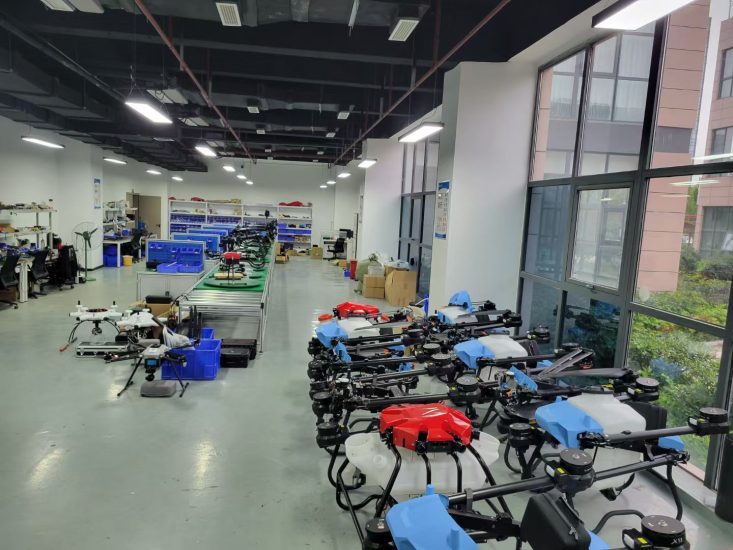
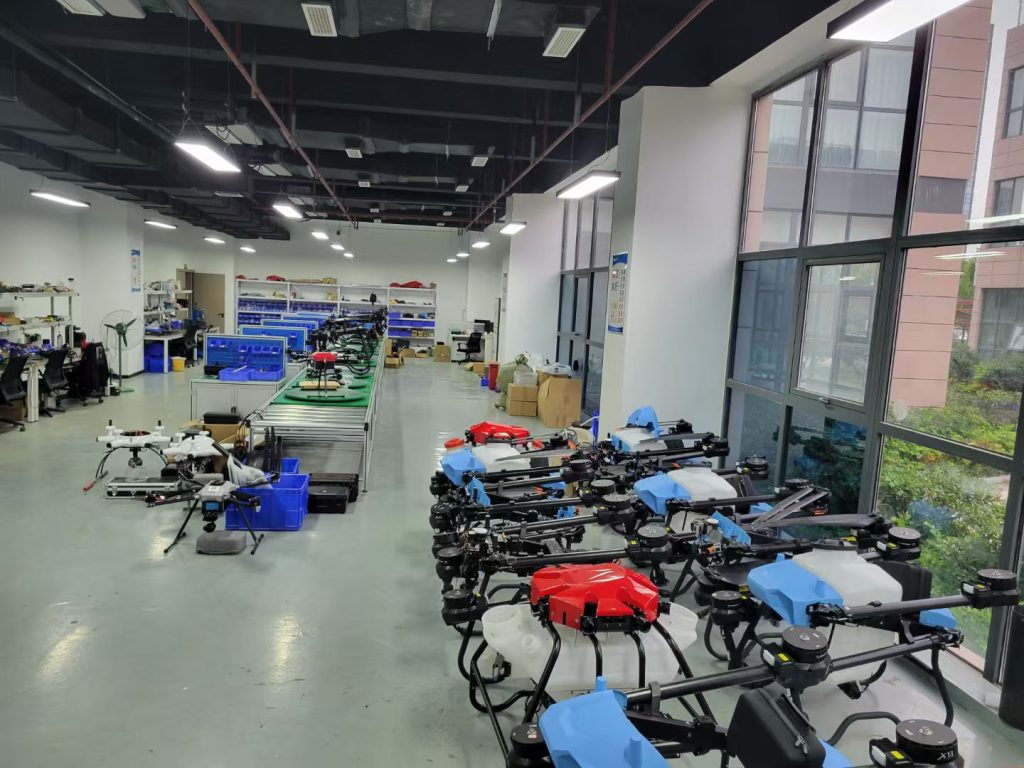
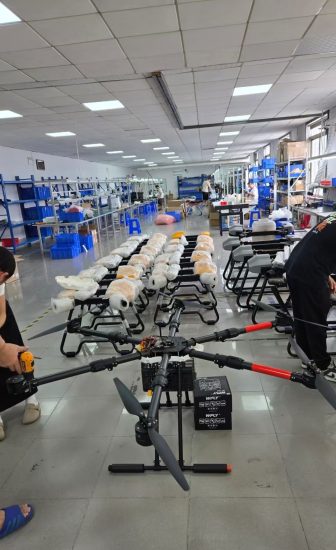
If you plan to purchase multiple units, verify that you are dealing with a genuine manufacturer or a supplier with reliable production capabilities.
Ask for information about:
- Factory location
- Production facilities
- Assembly process
- Quality inspection
- Product testing
- Engineering team
- Production capacity
- Spare-parts inventory
For long-term B2B cooperation, consistent production quality is more important than receiving one successful sample.
15. Ask for Product Testing Information
Before placing a large order, request evidence of product testing.
Useful testing information includes:
- Full-payload flight test
- Battery endurance test
- Spray-system test
- Motor test
- Communication test
- Positioning test
- Obstacle-avoidance test
- Waterproof testing where applicable
If possible, arrange a live demonstration or third-party inspection before shipment.
16. Compare the Complete Configuration
Do not compare two suppliers based only on their advertised prices.
For example:
| Specification | Supplier A | Supplier B |
|---|---|---|
| Liquid payload | 50KG | 50KG |
| Battery | Compare | Compare |
| Charger | Included? | Included? |
| RTK | Included? | Included? |
| Obstacle avoidance | Included? | Included? |
| Spray pump | Compare | Compare |
| Nozzles | Compare | Compare |
| Remote controller | Compare | Compare |
| Spare parts | Compare | Compare |
| Warranty | Compare | Compare |
| OEM | Available? | Available? |
| Technical support | Compare | Compare |
A detailed comparison can reveal why two apparently similar quotations have very different prices.
17. Check OEM and Private Label Services
If you are an agricultural equipment distributor, you may want to sell the drone under your own brand.
Ask whether the factory supports:
- Logo customization
- Product labels
- Packaging
- User manuals
- Color customization
- Remote controller branding
- Spare-parts packaging
- Software localization
Also confirm the MOQ and any additional tooling or development fees.
18. Consider International Shipping Requirements
Agricultural drones usually contain lithium batteries, which can affect international transportation.
Before placing an order, ask the manufacturer about:
- Export packaging
- Battery transportation documentation
- Dangerous-goods requirements where applicable
- Commercial invoice
- Packing list
- Product specifications
- Shipping weight and dimensions
If the shipment includes batteries, the transportation method should be planned in advance.
19. Check Target-Market Regulations
Agricultural drone regulations differ from country to country.
Depending on the destination, buyers may need to consider:
- UAV registration
- Operator requirements
- Radio-frequency regulations
- Agricultural chemical regulations
- Import requirements
- Product certification
- Insurance
- Local operating restrictions
The manufacturer should provide available product documentation, but the importer and operator should verify the requirements applicable in their own market.
20. Calculate Total Cost of Ownership
The purchase price is only one part of the total cost.
Consider:
Drone price + batteries + charger + spare parts + shipping + import costs + maintenance + training + operating costs
A slightly more expensive drone may offer better long-term value if it has:
- Better battery durability
- More reliable motors
- Easier maintenance
- Better spare-parts availability
- Stronger technical support
The goal should be to minimize the total cost of operating the equipment, not simply the initial purchase price.
A Practical Buyer Checklist
Before placing an order, use this checklist:
Product
- [ ] Confirm actual liquid payload
- [ ] Confirm maximum takeoff weight
- [ ] Confirm empty weight
- [ ] Confirm tank capacity
- [ ] Confirm flight time under load
Spraying
- [ ] Confirm pump specifications
- [ ] Confirm flow rate
- [ ] Confirm nozzle type
- [ ] Confirm spraying width
- [ ] Confirm flow-control system
Flight System
- [ ] GPS
- [ ] RTK
- [ ] Obstacle avoidance
- [ ] Terrain following
- [ ] Automatic route planning
- [ ] Return-to-home
Battery
- [ ] Battery voltage
- [ ] Battery capacity
- [ ] Number of batteries
- [ ] Charging time
- [ ] Expected battery life
- [ ] Replacement battery price
Factory
- [ ] Production capability
- [ ] Quality-control process
- [ ] Product testing
- [ ] Spare-parts supply
- [ ] OEM capability
- [ ] Technical support
Commercial
- [ ] Unit price
- [ ] MOQ
- [ ] Production lead time
- [ ] Warranty
- [ ] Packaging
- [ ] Shipping cost
- [ ] Payment terms
Conclusion
Choosing a 50KG agricultural spraying drone should never be based on price alone.
Before purchasing, buyers should carefully evaluate the actual payload, flight time under load, spraying system, battery performance, flight controller, RTK, obstacle avoidance, terrain following, construction quality, spare-parts availability, factory capability, and after-sales support.
For distributors and agricultural equipment importers, it is also important to consider OEM services, international shipping requirements, local regulations, and long-term operating costs.
The best manufacturer is not necessarily the one offering the cheapest drone. A reliable factory should be able to provide clear specifications, consistent production quality, practical testing data, spare parts, technical support, and long-term cooperation.
By checking these factors before placing an order, international buyers can reduce purchasing risks and choose a 50KG agricultural spraying drone that is better suited to their target market and agricultural applications.
FAQ
What should I check first when buying a 50KG agricultural spraying drone?
Start by confirming the actual liquid payload and maximum takeoff weight. Make sure the manufacturer’s definition of “50KG” is clear.
How important is flight time?
Very important. Always ask for flight time under the intended payload rather than relying on the empty-drone flight time.
Is RTK necessary?
RTK can be valuable for applications requiring higher positioning accuracy and repeatable flight routes. Whether it is necessary depends on the operating environment.
Should I buy additional batteries?
For commercial operations, additional batteries can help reduce downtime between flights, especially when the drone is used continuously.
How can I verify a manufacturer?
Ask for detailed specifications, factory information, testing data, production capability, warranty terms, spare-parts information, and technical-support details.
Can a 50KG agricultural drone be customized?
Many manufacturers offer OEM and private-label services, including logos, packaging, labels, and selected configuration changes. MOQ and customization costs should be confirmed before ordering.
What is more important, price or quality?
For commercial agricultural operations, reliability and total operating cost are usually more important than the lowest initial purchase price. A dependable drone with accessible spare parts and technical support can provide better long-term value.




No comments yet