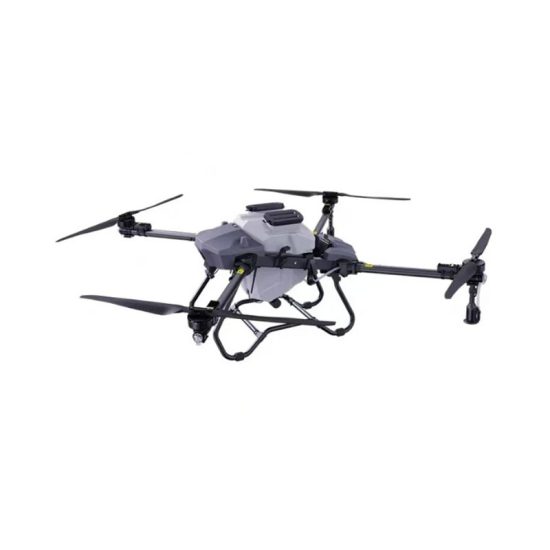


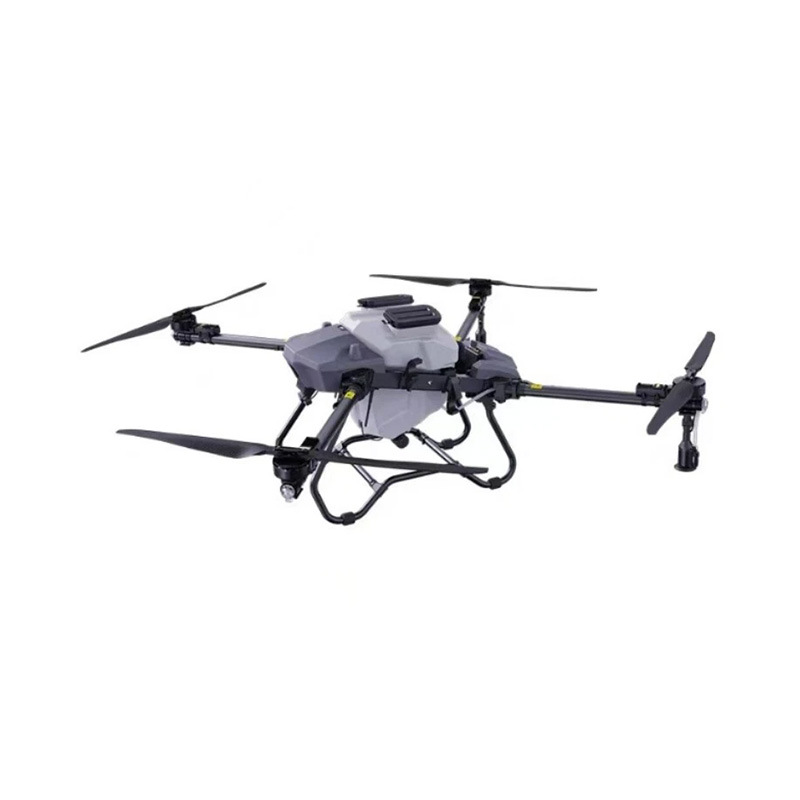
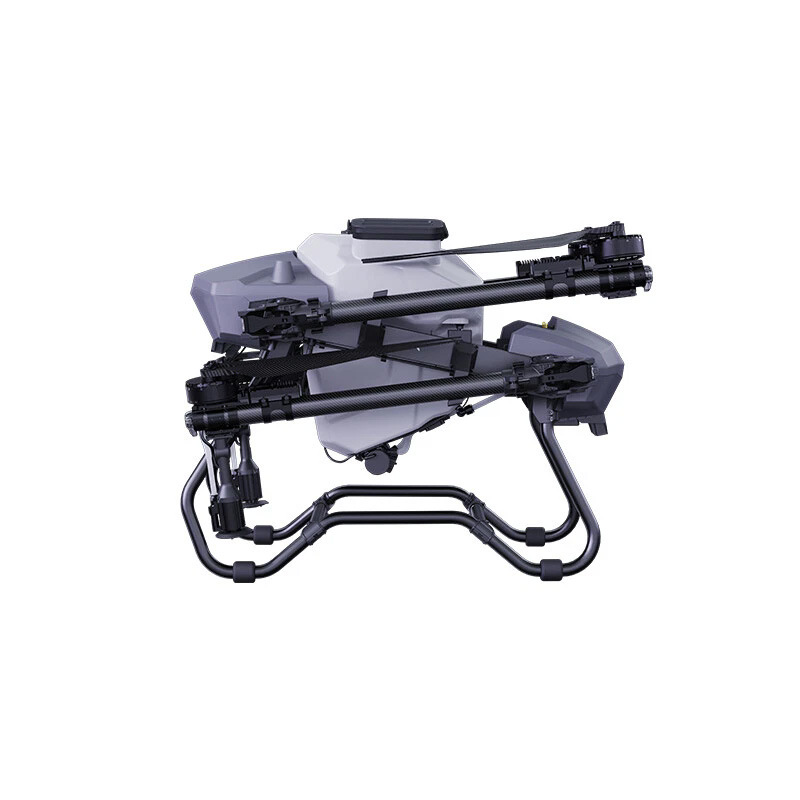
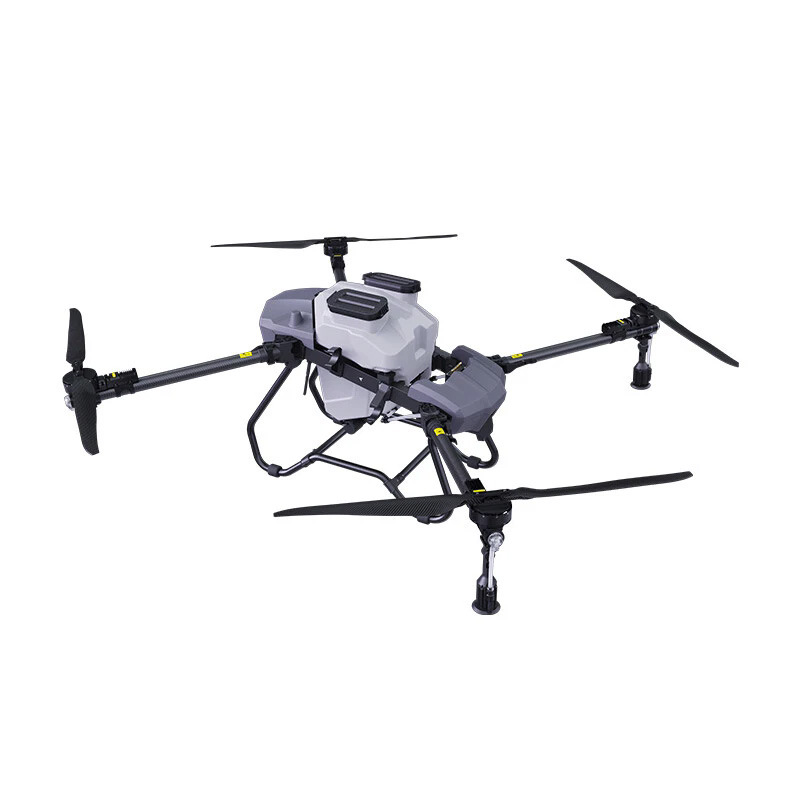
Agricultural drones are becoming an important tool for modern farming. They can help farmers apply crop protection products, liquid fertilizers, foliar nutrients, seeds, and other agricultural materials more efficiently than many traditional methods. However, choosing the right agricultural drone is not simply a matter of selecting the model with the largest tank or the longest advertised flight time.
The best agricultural drone depends on the crops you grow, the size of your farmland, the terrain, the type of agricultural application, local regulations, and your expected daily workload.
For farmers, agricultural service providers, distributors, and importers, understanding the key specifications before purchasing can help reduce operating costs and avoid choosing a drone that does not match actual field conditions.
This guide explains the most important factors to consider when selecting an agricultural drone, from spraying performance and payload capacity to battery life, flight control, safety, and after-sales support.
1. Start by Defining Your Main Agricultural Application
Before comparing different agricultural drone models, determine what you mainly plan to use the drone for.
Common applications include:
-
Pesticide spraying
-
Liquid fertilizer application
-
Foliar nutrient spraying
-
Disease and pest control
-
Rice seed spreading
-
Granular fertilizer spreading
-
Orchard spraying
-
Mountain farming
-
Crop monitoring and field inspection
Different applications require different drone configurations.
For example, a drone used for liquid spraying should have an efficient spraying system, accurate flow control, reliable pumps, and suitable nozzles. A drone designed for granular spreading requires a different hopper and spreading mechanism.
If you operate in orchards or mountainous areas, flight stability and terrain-following capabilities may be more important than maximum tank capacity.
This is why the first question should not be “How many liters can the drone carry?” The better question is:
What type of agricultural work will the drone perform most frequently?
2. Choose the Right Payload Capacity
Payload capacity is one of the most important specifications when choosing an agricultural drone.
Agricultural drones are available in different capacities, including smaller models for light operations and larger models designed for commercial farming and agricultural service providers.
Smaller Agricultural Drones
Smaller drones can be suitable for:
-
Small farms
-
Greenhouses
-
Orchards
-
Mountainous farmland
-
Narrow fields
-
Trial plots
Their main advantage is flexibility. They can operate in areas where larger drones may have difficulty taking off, landing, or maneuvering.
Medium-Capacity Agricultural Drones
Medium-sized models are often suitable for general agricultural operations. They can provide a balance between payload capacity, flight time, maneuverability, and operating cost.
They may be used for:
-
Rice fields
-
Wheat fields
-
Corn fields
-
Vegetable farms
-
Commercial orchards
-
Agricultural service operations
Large-Capacity Agricultural Drones
Large drones are generally designed for higher productivity. They may be suitable for:
-
Large farms
-
Agricultural contractors
-
Professional crop spraying companies
-
Large-scale commercial farming
-
Extensive plantation operations
A larger tank can reduce the number of refills required during a workday. However, a larger payload also increases the total takeoff weight and may require more powerful motors and larger batteries.
Therefore, a larger drone is not automatically the best choice for every farm.
3. Evaluate Spraying Performance Carefully
Spraying performance directly affects the quality of agricultural operations.
A drone with a large tank but poor spray distribution may not deliver good results. When evaluating a spraying system, pay attention to several key factors.
Spray Width
A wider effective spray width can improve field productivity. However, the actual working width depends on factors such as:
-
Flight altitude
-
Nozzle design
-
Wind conditions
-
Liquid formulation
-
Crop height
-
Drone speed
The advertised spray width should not be considered independently from actual field conditions.
Flow Rate
The spraying system should provide stable and adjustable flow control.
Different crops and agricultural products may require different application rates. A good agricultural drone should allow operators to adjust the flow according to the specific application.
Nozzle Configuration
Nozzle design affects:
-
Droplet size
-
Spray distribution
-
Coverage
-
Drift control
-
Application efficiency
Different crops may require different spray characteristics. For example, a low-growing crop may have different requirements from a tall crop or an orchard.
Spray Uniformity
Uniform spraying is essential. Uneven application can result in:
-
Over-application in some areas
-
Insufficient treatment in other areas
-
Higher product consumption
-
Reduced crop protection performance
When choosing an agricultural drone, buyers should ask for real operating data and test information instead of relying only on marketing descriptions.
4. Consider Flight Time and Battery Capacity
Flight time is another major factor in agricultural drone selection.
A longer flight time can reduce the number of battery changes during operation. However, advertised flight time is usually measured under specific test conditions.
Actual flight time may be affected by:
-
Payload weight
-
Wind speed
-
Flight speed
-
Temperature
-
Battery age
-
Flight route
-
Takeoff and landing frequency
A drone carrying a full tank will usually have a shorter flight time than a drone flying without a payload.
Therefore, it is more useful to ask about actual operating time under normal agricultural conditions rather than simply looking at the maximum flight time.
5. Battery and Charging Systems Are Extremely Important
For professional agricultural operations, batteries and charging equipment can significantly affect productivity.
A reliable agricultural drone battery should provide:
-
Stable power output
-
Sufficient capacity
-
Good cycle life
-
Temperature monitoring
-
Safety protection
-
Fast and reliable charging
Some agricultural drone systems use multiple batteries in rotation. While one battery is being used, another can be charged or prepared for the next flight.
For large farms and agricultural service companies, the charging system should be evaluated together with the drone.
A powerful drone with insufficient battery support may experience unnecessary downtime during busy farming seasons.
6. Check Flight Stability and Navigation Functions
Agricultural drones often operate in complex outdoor environments. Stable flight control is therefore essential.
Important functions may include:
-
GPS positioning
-
Automatic route planning
-
Return-to-home functionality
-
Obstacle detection
-
Terrain following
-
Altitude control
-
Low-battery warnings
-
Signal-loss protection
For flat farmland, standard positioning systems may be sufficient for many operations.
For orchards, hills, and uneven terrain, terrain-following functions can be particularly useful. The drone can maintain a more consistent distance from the crop surface, which may help improve spray coverage.
However, buyers should confirm which functions are included in the standard configuration and which require additional equipment.
7. Think About the Type of Crops You Grow
Different crops require different agricultural drone configurations.
Rice Fields
Rice farming often requires:
-
Efficient liquid spraying
-
Granular spreading
-
Stable operation over wet fields
-
Good coverage over large areas
Corn and Wheat
Large field crops may require:
-
High operating efficiency
-
Longer working time
-
Accurate route planning
-
Suitable spray width
Orchards
Orchard operations can be more complex because of:
-
Trees of different heights
-
Uneven terrain
-
Dense foliage
-
Narrow operating spaces
An agricultural drone for orchard use may require stronger airflow, terrain adaptation, and suitable spray technology.
Vegetables
Vegetable crops may require careful application control. Excessive application can create unnecessary product waste or crop damage.
The best agricultural drone should therefore be matched to the crop rather than selected only according to the highest technical specification.
8. Consider the Size of Your Farmland
The size of your operation should influence the drone you choose.
For a small farm, purchasing a very large agricultural drone may increase the initial investment and operating cost without providing meaningful benefits.
For a large farm or agricultural service business, a small drone may require too many refills and battery changes.
A useful way to compare different models is to estimate:
-
Total daily operating area
-
Average refill time
-
Battery charging time
-
Operator workload
-
Transportation requirements
-
Expected annual utilization
The ideal drone is the one that can meet your daily operating requirements at a reasonable total cost.
9. Understand the Total Cost of Ownership
The purchase price is only one part of the cost of owning an agricultural drone.
You should also consider:
-
Batteries
-
Chargers
-
Spare propellers
-
Pumps
-
Nozzles
-
Motors
-
Maintenance
-
Transportation
-
Operator training
-
Software services
-
Replacement parts
A drone with a lower purchase price may not necessarily be cheaper over several years if spare parts are expensive or technical support is difficult to access.
Before purchasing, ask the supplier about the availability of replacement parts and the expected maintenance requirements.
10. Select a Supplier That Can Support Your Market
For international buyers, supplier support is particularly important.
Before placing a bulk order, ask about:
-
Product specifications
-
OEM and ODM options
-
Packaging
-
Export documents
-
Spare parts
-
Warranty terms
-
Technical support
-
Training materials
-
Shipping arrangements
If you are a distributor, you may also need customized colors, branding, packaging, user manuals, and software language options.
A professional agricultural drone manufacturer should be able to provide clear technical information and help buyers select the right configuration for their target market.
11. OEM and ODM Options for Agricultural Drone Buyers
For distributors and agricultural equipment brands, OEM and ODM manufacturing can provide additional flexibility.
Possible customization options may include:
-
Brand logo
-
Product appearance
-
Color
-
Packaging
-
User manual
-
Remote controller interface
-
Battery configuration
-
Spraying system
-
Product accessories
However, customization should be based on actual market demand.
For example, a distributor serving small farms may prefer a compact and easy-to-operate model. A professional agricultural service company may need a larger payload and higher productivity.
The right manufacturer should be able to discuss these requirements before recommending a final configuration.
12. What Questions Should You Ask Before Buying?
Before placing an order, buyers should ask the following questions:
-
What is the recommended operating area for this model?
-
What is the payload capacity under normal working conditions?
-
How long does the drone operate with a full payload?
-
What is the actual spraying width?
-
Can the spray flow rate be adjusted?
-
What types of nozzles are available?
-
How long does it take to charge the battery?
-
How many batteries are recommended for continuous operation?
-
Are spare parts readily available?
-
Is technical support available after purchase?
-
Can the product be customized for my market?
-
What documents are available for export and local registration?
These questions can help buyers compare suppliers more objectively.
13. Common Mistakes When Choosing an Agricultural Drone
Choosing Only by Price
The lowest price may not provide the best long-term value.
A low-cost drone may have limitations in:
-
Battery life
-
Spray consistency
-
Software
-
Spare parts
-
Technical support
Focusing Only on Payload
A large payload does not guarantee high productivity. The complete system should be evaluated, including flight time, refill speed, spray width, and battery management.
Ignoring Local Regulations
Agricultural drone regulations vary between countries and regions. Buyers should understand local requirements before importing or operating a drone.
Not Considering Spare Parts
Agricultural drones operate in demanding environments. Parts such as propellers, pumps, nozzles, and batteries may eventually need replacement.
A supplier with reliable parts support can help reduce downtime.
14. How to Choose the Right Agricultural Drone for Your Business
A simple selection process can help narrow down your options.
Step 1: Define Your Main Application
Determine whether you mainly need spraying, spreading, orchard operations, or multiple functions.
Step 2: Estimate Your Daily Workload
Calculate the approximate area you need to cover each day.
Step 3: Compare Payload and Flight Time
Look at the relationship between tank capacity, battery life, and actual operating time.
Step 4: Evaluate the Spraying System
Check the pump, nozzles, flow control, and spray uniformity.
Step 5: Consider Your Terrain
Flat farmland, orchards, and mountainous regions may require different navigation functions.
Step 6: Calculate the Total Investment
Include the drone, batteries, charger, spare parts, transportation, and training.
Step 7: Confirm Supplier Support
Make sure the supplier can provide technical assistance and replacement parts when needed.
Frequently Asked Questions
What is the best agricultural drone for a small farm?
The best choice depends on the farm size, crop type, terrain, and application requirements. A compact model may be more practical for small farms because it can offer easier transportation and lower operating costs.
Is a larger agricultural drone always better?
No. A larger drone may provide greater productivity, but it can also require more investment, larger batteries, and more operating space. The right size should match the actual workload.
How long can an agricultural drone fly?
Actual flight time varies depending on payload, battery capacity, weather, flight speed, and operating conditions. Buyers should compare flight time under realistic working conditions rather than relying only on no-load test data.
What is more important: payload or spraying width?
Both are important, but they affect productivity in different ways. Payload determines how much material the drone can carry, while spraying width affects the area covered during each flight. The best combination depends on your specific operation.
Can agricultural drones be customized?
Many agricultural drone manufacturers offer OEM and ODM services, including branding, packaging, appearance, accessories, and selected technical configurations. Customization requirements should be discussed before production.
Are agricultural drones suitable for orchards?
Some models are designed for orchard applications. Buyers should pay attention to terrain-following, flight stability, airflow, spray coverage, and the ability to operate around trees.
How should I choose an agricultural drone supplier?
Look for a supplier that can provide clear technical specifications, reliable spare parts, technical support, customization services, and consistent communication throughout the purchasing process.
Final Thoughts
Choosing an agricultural drone requires more than comparing prices or selecting the model with the largest payload. The right choice should be based on the complete relationship between spraying performance, flight time, battery system, crop type, terrain, daily workload, operating cost, and supplier support.
For farmers and agricultural service providers, a properly selected drone can help improve work efficiency and make field operations more flexible. For importers and distributors, selecting the right manufacturer and configuration is equally important for building a reliable product offering in the local market.
Before making a purchase, clearly define your agricultural requirements, compare the complete specifications, and request detailed technical information from the supplier. This approach can help you choose an agricultural drone that is better suited to your actual operations and long-term business goals.
THE END


No comments yet