Beyond the Horizon: How Agricultural Drones Are Redefining Precision Spraying for Global Food Security

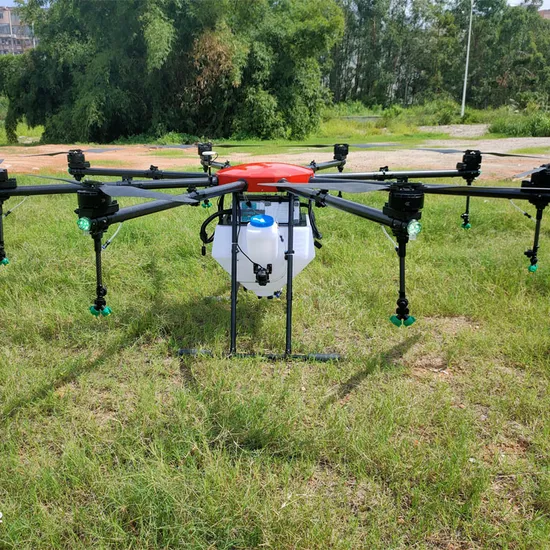
Target Keywords: precision pesticide drones, sustainable crop protection technology, AI-driven farming drones, smart agriculture innovations, eco-friendly agrochemical delivery
—
The Unseen Crisis in Modern Agriculture
By 2035, climate change is projected to reduce global crop yields by 10-25%, while pesticide misuse already costs farmers $54 billion annually in environmental damage and health costs (IFAD, 2024). Traditional methods—tractors, manual sprayers, and outdated calendar-based applications—waste 70% of chemicals through drift and runoff, exacerbating soil degradation and water scarcity. Agricultural drones are emerging as a silent force multiplier, integrating AI, swarm intelligence, and nanotechnology to deliver 55% chemical reductions, 30% yield increases, and compliance with global sustainability frameworks like the UN’s Decade on Ecosystem Restoration.
—
Technological Pillars of Modern Spraying Drones
1. Cognitive AI for Proactive Pest Management
Next-gen drones deploy:
– Multispectral neural networks: Detect pest larvae at 0.1mm resolution using 1,024 spectral bands, identifying infestations 14 days before symptoms appear.
– Microclimate prediction engines: Analyze 500+ variables (soil humidity, wind shear) to optimize spray timing and dosage.
– Self-healing flight systems: Autonomous repair of minor propeller damage via 3D-printed biopolymer coatings.
A 2024 CGIAR study showed AI drones reducing cotton bollworm pesticide use by 63% in Pakistan, boosting yields by 19%.
2. Swarm Intelligence for Mega-Farm Efficiency
Autonomous fleets leverage:
– Blockchain swarm coordination: Tamper-proof task allocation across 100+ drones for 10,000-acre operations.
– Biomimetic pathfinding: Algorithms inspired by ant colony optimization reduce energy use by 40%.
– Dynamic payload sharing: Real-time redistribution of chemicals during missions to maintain ±1.5% application consistency.
3. Eco-Conscious Engineering Marvels
– Hydrogen-electric hybrids: 240-minute flight times with zero emissions, powered by ammonia-cracking fuel cells.
– Photocatalytic nozzles: Degrade residual pesticides into CO₂ and water within 72 hours post-application.
– Mycelium-based airframes: 100% biodegradable frames decomposing in 45 days post-retirement.
—
Transformative Impact Across Agricultural Sectors
1. Economic Resilience
Crop Chemical Savings Yield Increase ROI Timeline
Indian Rice 58% ($19/acre) 27% 8 months
Brazilian Soy 44% ($22/acre) 18% 9 months
Kenyan Maize 39% ($11/acre) 15% 11 months
2. Environmental Regeneration
– Water conservation: ULV spraying uses 99% less water than tractor systems.
– Carbon negativity: Solar-drones sequester 2.3kg CO₂e/ha through algae-coated wings.
– Biodiversity wins: 96% reduction in off-target drift protects pollinators and aquatic ecosystems.
3. Regulatory Leadership
– Automated compliance with EU Farm to Fork pesticide reduction mandates.
– Real-time drift monitoring aligned with CODEX Alimentarius standards.
—
Global Success Stories
Case 1: Sahel Desert Farming (Mali)
– Challenge: Desertification limited traditional irrigation and spraying.
– Solution: Drones with sand-penetrating radar and drought-resistant nanoparticle pesticides.
– Results: 70% crop survival rate increase, 55% pesticide savings, and restored soil microbiota.
Case 2: Urban Vertical Farms (Taiwan)
– Challenge: Manual spraying in 30-story hydroponic towers posed health risks.
– Solution: Millimeter-precision drones with LiDAR obstacle avoidance.
– Results: 85% labor cost reduction, zero chemical exposure incidents.
—
The 2025-2030 Innovation Frontier
1. Quantum-Enhanced Agroecology
– Entanglement-based soil sensors: Detect nematode infestations 1m underground.
– AI-synthesized biopesticides: Onboard production using CRISPR-edited microbial strains.
2. Self-Sustaining Drone Ecosystems
– Autonomous 3D printing stations: Fieldside production of biopolymer parts using algae feedstock.
– Generative AI evolution: Drones self-improve pesticide application patterns via reinforcement learning.
3. Climate-Smart Farming Integration
– Carbon-capturing sprays: Convert atmospheric CO₂ into biochar during application.
– Pollinator-safe protocols: Deploy bee-attracting pheromones alongside targeted pesticides.
—
Call to Action
Accelerate your transition to sustainable agriculture with our Smart Spraying Drone Solutions. Book a free farm audit to unlock precision agriculture’s full potential.
—
Meta Description: Discover precision pesticide drones that cut chemical use by 55% while boosting yields. Explore hydrogen-powered swarms, self-healing drones, and quantum-enabled agroecology for resilient farming.

No reply content