The Development Direction of Future Agricultural Drones

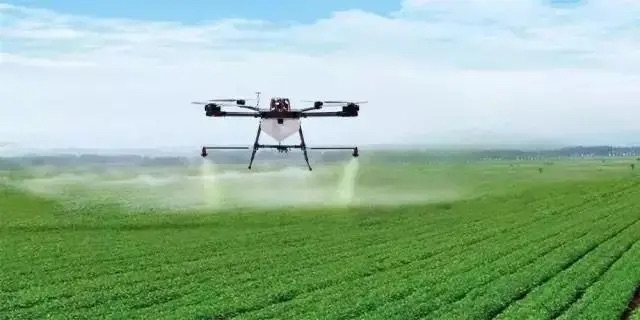
Intelligence and Autonomy: In the future, plant protection drones will become increasingly intelligent and autonomous, not only able to operate and fly independently, but also able to obtain data through sensors for real-time analysis and decision-making. In addition, future agricultural drones will have the potential to achieve autonomous obstacle avoidance, autonomous takeoff and landing, and other functions, thereby further improving operational efficiency and safety.
Multifunctionality: In the future, plant protection drones will not only be tools for pesticide and fertilizer spraying in plant protection operations, but also be able to carry more sensors and equipment to achieve various functions, such as farmland monitoring, soil testing, sowing, etc. This will contribute to the comprehensive upgrading and intelligence of agricultural production.
Precision: In the future, plant protection drones will become increasingly precise, not only able to accurately identify diseases, pests, and weeds, but also able to apply precise pesticides and fertilizers to each crop, reducing the use of pesticides, and improving the quality and yield of crops.
Efficient: In the future, plant protection drones will become increasingly efficient, not only able to achieve autonomous flight and operation, but also able to carry out multi machine collaborative operations, improving work efficiency and quality.
Green and environmentally friendly: In the future, plant protection drones will become increasingly environmentally friendly, adopting more environmentally friendly biological pesticides and physical control methods, reducing the use of chemical pesticides, and protecting the ecological environment and the health of farmers.
Improvement of load capacity and endurance: In the future, the load capacity and endurance of agricultural drones will continue to increase, which will bring more efficient operations and lower costs. The progress of future battery technology, optimization of body structure, and upgrading of power systems may all be key to achieving this goal.
In terms of frame structure, future models may be more scientific and reasonable, using lighter and high-strength materials to improve payload and endurance. The design of the fuselage may also be more aerodynamic in order to improve flight efficiency and stability.
In response to the current situation of arable land in China, the size of agricultural drone models needs to be selected based on specific operational needs. For small-scale farmers, smaller models may be more suitable; For large-scale agricultural enterprises, larger models may be more suitable.
The development of future agricultural drones will continue to make new progress in terms of load-bearing capacity, intelligence, versatility, efficiency, and environmental protection. At the same time, according to specific operational and market demands, the size, body structure, and materials of agricultural drones will also undergo changes and upgrades.

No reply content