Digital technology makes agriculture smarter

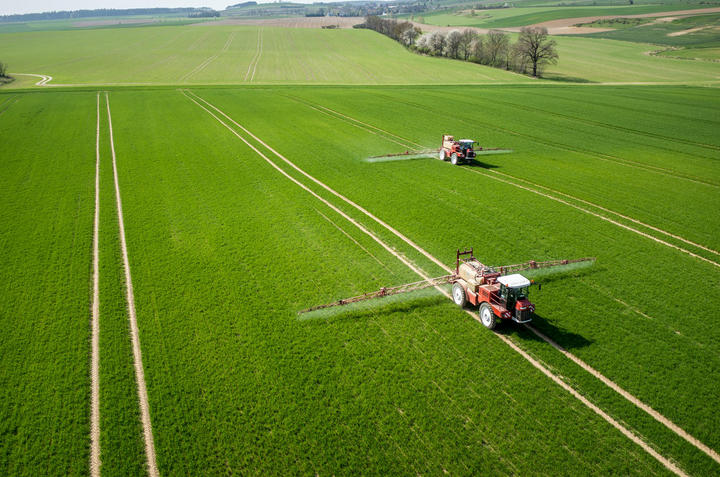
At the unmanned smart farm of Yinbao High tech Company in Yancheng City, Jiangsu Province, a red and white drone shuttles over the rice field, emitting a white “fog curtain” that gently brushes the green rice waves.
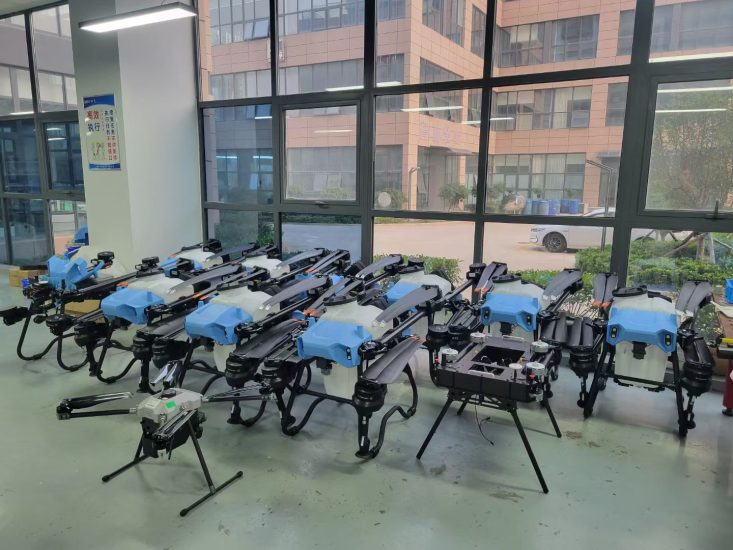
Yang Hengcheng from the Yinbao High tech Department told reporters that this is a task where workers use a smart agricultural system to control drones to spray rice. A drone can complete pesticide spraying on 500 acres of land in 4 hours. With 2 drones, it can complete a round of rice spraying on 5000 acres of the farm in just one or two days, which is more efficient than manual spraying, with higher coverage and more uniform spraying.
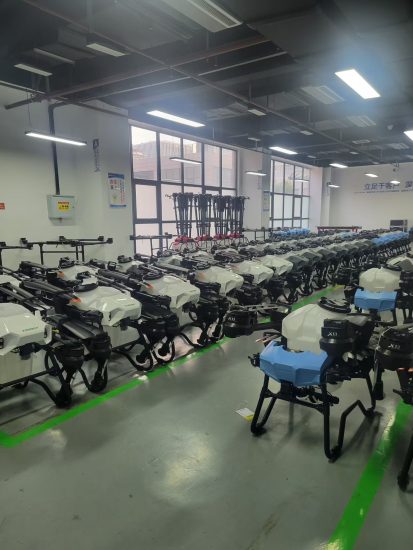
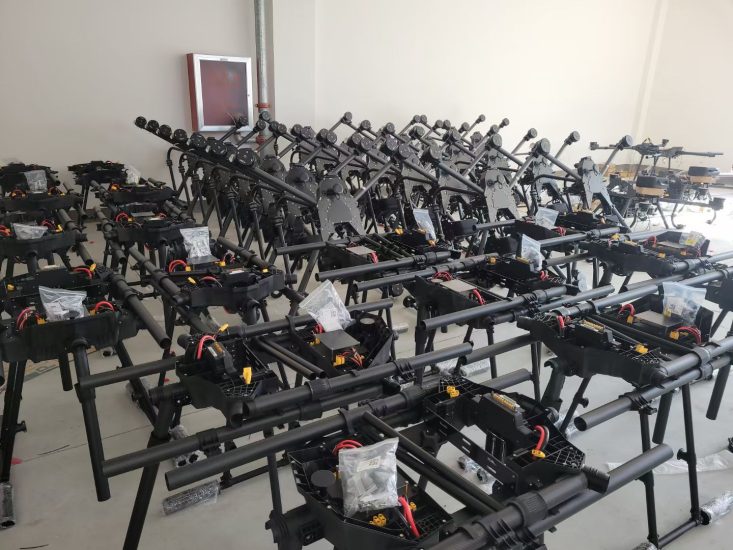
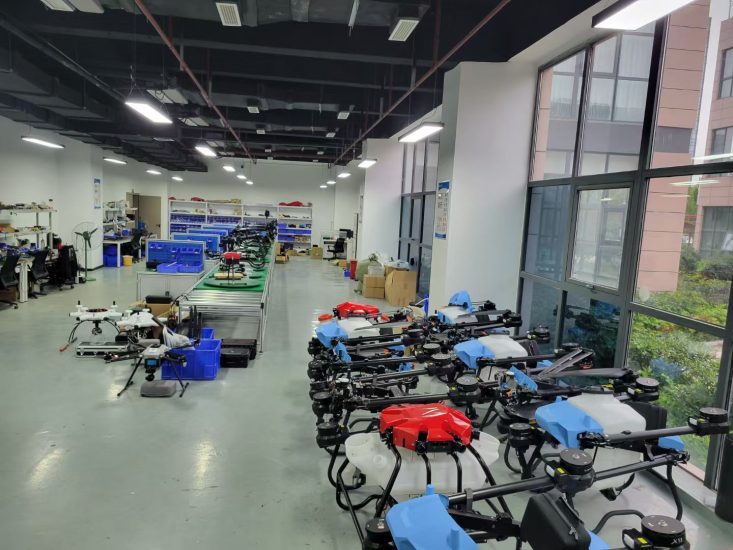
In recent years, digital technology and intelligent equipment have demonstrated their skills in various aspects of agricultural production, such as cultivation, planting, management, and harvesting. Smart agricultural equipment such as remote sensing drones and the Internet of Things have made field management more convenient and intelligent. Entering the Yinbao High tech Unmanned Farm, amidst the rolling rice waves of 5000 acres of farmland, there is no farmer in sight. Instead, there are drones flying back and forth, as well as the “smart brain” running at high speed in the office.
Whether there is enough water and fertilizer, whether the land is flat, and where weeds and pests appear… These agricultural data can be viewed in real-time on computer screens, playing with the computer, driving a plane, and sitting in the office can plant the fields well. The images that farmers couldn’t even imagine in the past have become a reality here.
In the past, manual inspections of rice fields required one person to inspect up to 500 acres of land per day, while 5000 acres of land required multiple farmers to complete for several days. But by using an intelligent platform to command remote sensing drones for field patrols, 2000 acres of land can be patrolled in just 2 hours. According to Liu Fubi, a technician at Jifei Technology Company, their remote sensing drone can survey farmland in front of it. The drone’s “golden eye” can accurately obtain centimeter level image data, and the area and terrain of farmland are clearly visible. In the field management process, remote sensing drones can fly out once to understand the situation of weeds in the rice field and identify different types of weeds.
At present, they use this smart agricultural production management system, which can save about 20% of pesticides and fertilizers. By adopting traditional farming methods, the net income of the two rice and wheat seasons throughout the year is about 500-600 yuan/mu, while the income from their single season wheat cultivation reaches 400 yuan/mu. Even more gratifying is the return of young people who fled the countryside in the past. Smart agriculture has given farmers a new professional connotation. Farmers who were supposed to be busy in the fields have become “commanders” sitting in the office, and online observation of farmland, recording of agricultural conditions, and scheduling of farming have become the norm.

No reply content