Multipurpose development and utilization technology of rapeseed

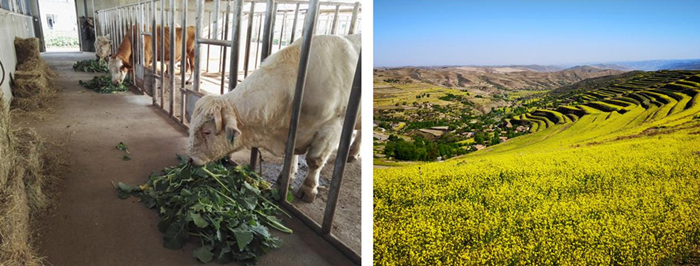
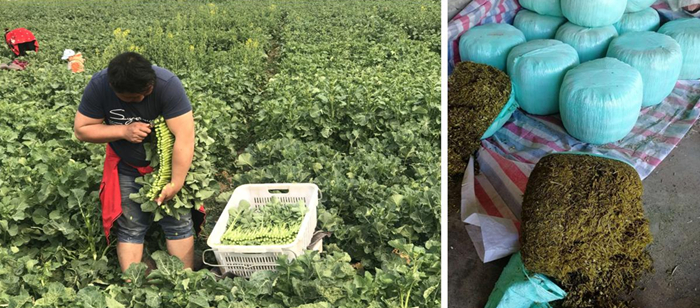
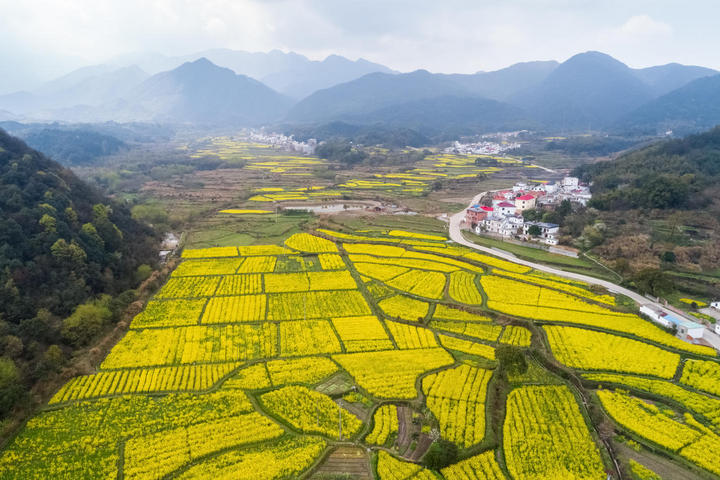
This technology is an organic integration of rapeseed production, vegetables, feed, green manure, tourism, bee honey harvesting, and other functions, forming a “one vegetable multi use” technology model suitable for different regions of rapeseed. It can not only increase profits, but also combine planting and breeding to build beautiful rural areas, and integrate primary, secondary, and tertiary industries.2、 Increase production and efficiencyIf rapeseed is harvested, the yield per mu is 150 kilograms, 5.0 yuan/kg, and the physical and chemical input per mu is about 300 yuan (excluding land fees and labor input), resulting in a benefit of around 450 yuan per mu; Used as feed, the yield of fresh feed per mu is 3-5 tons, 0.3 yuan/kg, with an input of 300 yuan per mu, and a benefit of over 600 yuan per mu; If you harvest more than 250 kilograms of cauliflower per mu as a vegetable after picking the cauliflower once, calculated at 5.0 yuan/kg, deducting 200 yuan of labor, the benefit per mu will increase by more than 1100 yuan; When used as green fertilizer, its yield is significantly higher than that of purple vetch (safflower grass), and the seed cost is low, with significant economic and ecological benefits; As a tourist resource, it can increase the added value of rapeseed.3、 Technical points1. The multi-purpose development and utilization models of rapeseed have various forms, mainly including the following: (1) vegetable+feed/fertilizer use; (2) Vegetable+feed+oil; (3) Vegetable/feed+flower viewing+oil use; (4) Vegetable/feed+oil use. Rapeseed harvested after flowering can be used as a source of honey.2. Sowing time(1) Northwest and Northeast regions. The sowing period for oilseed rape is from the end of March to the beginning of April. Multiple cropping of rapeseed after wheat can be sown in a timely manner from the end of July to early August, for use as feed or green manure.(2) The Yangtze River Basin. The optimal sowing period for oil based crops is from September 25th to October 15th. If used as green manure, the sowing date can be postponed to around October 25th, and the initial flowering period can be turned over and returned to the field.3. Variety selection recommends the selection of high-yield, density tolerant, lodging resistant, and disease resistant rapeseed varieties approved (registered) in various regions; If used for cooking, approved (registered) special varieties can be selected; The seed quality meets the industry standard of low erucic acid and low sulfur glucoside rapeseed seeds (NY414-2000) in China.4. If there is no conflict between mechanical live streaming or transplanting, live streaming should be adopted. Otherwise, seedling cultivation and transplantation can be used.5. Fertilizer operation: Apply rapeseed specific formula fertilizer of 40-50 kg/mu during sowing. After picking a season of cauliflower stems, timely apply 5 kg/mu of urea.6. In the field, if there are heavy weeds in the field, they should be closed for weeding within 2-3 days after sowing. Clean up the three ditches in the Yangtze River Basin in a timely manner after spring to ensure that the rain stays in the fields and dry up. Prevention and control of aphids and cabbage beetles before winter, and prevention and control of sclerotinia disease during the early flowering period.7. Timely harvesting is used as a vegetable: harvest 1-2 times on sunny days when the stem height is about 15 cm. Second, it can be used as feed: when it is used as fresh feed or silage, it can be harvested at the final flowering stage; It can also be done by cutting and feeding or grassland grazing. Thirdly, it is used as green fertilizer: the Yangtze River Basin can be turned over and returned to the field in late April, while the northwest and northeast regions can be turned over and returned to the field before frost. Fourth, harvest the seeds: when all the rapeseed pods are loquat yellow, pick up and thresh them 3-5 days after ripening after cutting them down; Or the whole plant of pods can be harvested mechanically after being completely withered and yellowed.51.JPGWhen harvesting rapeseed stalks, attention should be paid to ensuring good quality feed. Rape should be wrapped and silaged after the final flowering period is harvested52.JPGEach cow can be fed 3-5 kilograms of fresh feed rapeseed per day. Gansu Huining rapeseed sightseeing tourism and green manure returning mode8. When the moisture content of rapeseed drops below 9%, it should be cleaned and bagged for storage.4、 Suitable areaSuitable for the main rapeseed producing areas in the Yangtze River Basin of China, as well as areas such as the Yellow and Huai Rivers, Northeast, and Northwest.5、 Precautions1. Rapeseed has various uses and can be adjusted according to local market demand and actual needs. It is suitable for vegetables, feed, and oil.2. Achieve soil moisture harvesting and sowing to ensure full and even seedlings.3. High density planting, evenly spaced between plants and rows.4. After harvesting vegetable stems or feed, timely apply fertilizer to ensure later biological yield.


No reply content