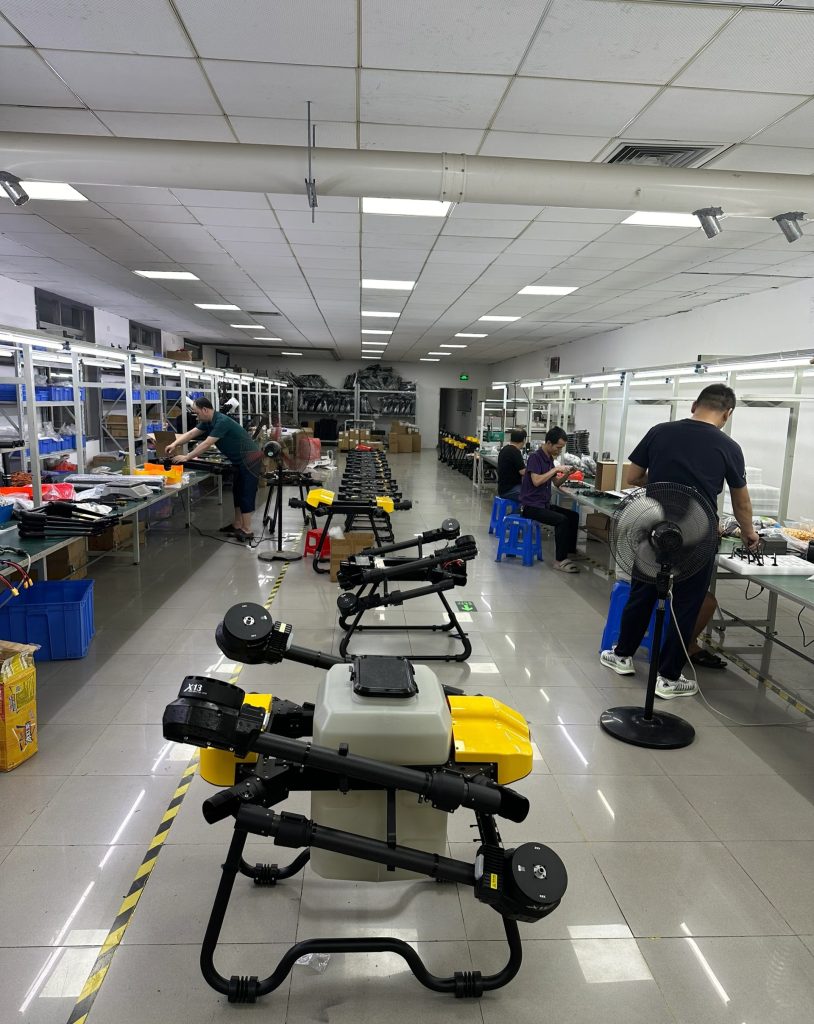
Sourcing crop protection equipment from a Switzerland-based agricultural UAV manufacturer means choosing a supplier whose entire operation — from R&D and component sourcing to final assembly and flight testing — is anchored in one of the world’s most rigorous engineering environments. For global buyers, this geographic and operational specificity is not incidental. It determines the quality of the product, the completeness of its certification documentation, and the long-term viability of the platform in increasingly regulated markets.
This article provides a comprehensive technical and commercial overview of what a Switzerland-based agricultural UAV manufacturer delivers, how its pesticide and fertilizer spraying drones are engineered, and what procurement professionals should evaluate before committing to a supplier relationship.
The Strategic Advantage of a Switzerland-Based Operation
When a manufacturer is based in Switzerland — meaning its engineering team, production facility, quality control laboratory, and certification office are all located within Swiss borders — the buyer benefits from a level of integration that distributed or outsourced manufacturing models cannot match.
Unified Engineering-to-Production Pipeline
In a Switzerland-based facility, the engineers who design the flight controller algorithms are in the same building as the technicians who calibrate the sensors. The team that specifies the centrifugal nozzle geometry works directly with the production line that assembles the spray boom. This proximity eliminates the communication gaps that plague outsourced manufacturing, where design intent is lost in translation between separate companies in different countries.
The result: every design decision is validated on the production floor before it reaches your customer’s field.
Swiss Environmental Standards as Design Input
Switzerland’s environmental regulations for pesticide and fertilizer application are among the strictest in the world. Buffer zones near water bodies, drift-reduction mandates, and chemical handling safety requirements are not external compliance hurdles for a Swiss manufacturer — they are written into the product specification from day one.
A pesticide and fertilizer spraying drone designed in Switzerland arrives pre-optimized for:
-
Minimum drift operation (tight droplet size control, low-altitude precision flight)
-
Accurate application rate management (flow sensors, RTK-speed integration)
-
Safe chemical handling (closed-loop filling compatibility, corrosion-resistant materials)
-
Low-noise operation (electric propulsion, optimized propeller geometry)
Intellectual Property Protection
Switzerland consistently ranks among the top jurisdictions globally for intellectual property protection. For distributors negotiating custom configurations or private-label agreements, this provides legal certainty that proprietary designs, branding, and market-specific adaptations will not be replicated and sold to competitors.
Dual-Function Platform: Pesticide and Fertilizer Spraying
A key differentiator of Switzerland-based agricultural UAV manufacturers is the integrated dual-application architecture. Rather than producing separate drones for liquid pesticide application and solid fertilizer spreading, Swiss platforms are engineered as convertible systems that switch between modes with minimal downtime.
Liquid Pesticide Application System
Component
|
Technical Specification
|
Tank Material
|
Chemical-resistant HDPE or polypropylene, UV-stabilized
|
Tank Capacity
|
Configurable from 10L to 40L depending on airframe
|
Pump Type
|
Diaphragm or centrifugal, corrosion-resistant
|
Nozzle System
|
Centrifugal atomizers, individually controllable
|
Droplet Size Range
|
50–300 microns, adjustable in flight
|
Flow Control
|
Closed-loop with real-time flow sensors
|
Application Rate Accuracy
|
±3% across varying flight speeds
|
The liquid system is designed around uniform droplet generation. Centrifugal nozzles rotate at speeds up to 10,000 RPM, shearing the liquid into consistently sized droplets. This eliminates the wide droplet-size distribution that causes both drift (small droplets) and poor coverage (large droplets) in conventional pressure-nozzle systems.
Solid Fertilizer Spreading System
Component
|
Technical Specification
|
Hopper Capacity
|
10–25 kg granular capacity (model-dependent)
|
Spreading Mechanism
|
Centrifugal disc with adjustable vane geometry
|
Granule Size Compatibility
|
0.5–5 mm diameter (seeds, fertilizer, micronutrients)
|
Spreading Width
|
Adjustable from 3 m to 8 m per pass
|
Flow Rate Control
|
Electronic gate with PWM (pulse-width modulation)
|
Calibration
|
Auto-calibration routine with known-weight test cycle
|
The spreading system uses the same flight controller integration as the liquid system. Application rate (kg/ha) is maintained automatically as ground speed changes. For distributors serving markets where fertilizer application represents 60–70% of total drone usage (common in Latin America and Southeast Asia), this dual-function capability is a critical selling point.
Mode Switching in the Field
Transitioning from liquid spraying to granular spreading typically requires:
-
Removing the liquid tank (quick-release latches, 30 seconds)
-
Mounting the spreader hopper (same latch system, 30 seconds)
-
Selecting the spreader profile in the ground control station (15 seconds)
-
Running the auto-calibration routine (2 minutes)
Total downtime: under 4 minutes. This allows a single drone and operator to service both pesticide and fertilizer contracts in the same day without returning to a base station.
RTK Positioning: The Foundation of Accurate Application
Every Switzerland-based agricultural UAV manufacturer builds RTK (Real-Time Kinematic) positioning into the platform as a core subsystem, not an optional accessory. The RTK module is:
-
Hardware-integrated — mounted directly to the flight controller PCB, not attached via external cable
-
Firmware-calibrated — the RTK correction stream is processed at the flight controller level for zero-latency positioning
-
Multi-constellation — supports GPS, GLONASS, Galileo, and BeiDou simultaneously for maximum satellite availability
-
Dual-band — L1/L2 or L1/L5 reception filters ionospheric errors, critical for reliable operation in mountainous or high-latitude regions
How RTK Improves Pesticide Application
Without RTK
|
With RTK
|
±2–5 m positional uncertainty
|
±1–3 cm positional accuracy
|
Overlapping passes waste 10–20% of chemical
|
Zero overlap, 100% coverage efficiency
|
Manual piloting required for irregular fields
|
Fully autonomous boundary-following flight
|
Inconsistent altitude on slopes causes uneven deposition
|
Terrain-following maintains constant nozzle-to-crop distance
|
Landing accuracy ±3–5 m
|
Landing accuracy ±10 cm (automated docking possible)
|
How RTK Improves Fertilizer Spreading
For granular application, RTK enables variable-rate spreading tied to GPS position. The drone can:
-
Automatically increase spread rate over low-fertility zones (via uploaded prescription maps)
-
Reduce or skip spreading over waterways, roads, or non-crop areas
-
Maintain consistent swath overlap even in strong crosswinds
-
Log exact application rates at every coordinate for compliance reporting
Manufacturing and Quality Assurance
A Switzerland-based agricultural UAV manufacturer maintains quality control processes that reflect the country’s precision manufacturing heritage:
Component-Level Testing
-
Every motor is run under load for a minimum of 15 minutes before installation
-
Every electronic speed controller (ESC) is thermally cycled and load-tested
-
Every battery pack undergoes formation charging and capacity verification
-
Every nozzle is flow-tested at three different pressure/flow settings
Subsystem Integration Testing
-
Spray system is activated on a test rig with water to verify pump pressure, flow rate, and nozzle atomization before installation on the airframe
-
Spreader system is run with test granules to verify disc balance, vane alignment, and gate calibration
-
RTK module is tested against a known reference station with documented correction data
Full-System Flight Validation
-
Every completed drone performs a tethered test flight (safety tether prevents free flight) that includes:
-
Full throttle range test
-
Spray or spreader system activation
-
RTK lock verification at multiple positions
-
Emergency stop and fail-safe protocol validation
-
Automated landing accuracy check
No drone leaves the factory without passing this final validation. The test data is logged and can be provided to the distributor upon request.
Regulatory Documentation and Global Market Access
A Switzerland-based manufacturer provides a comprehensive certification package that supports import and operation in major agricultural markets:
Certification
|
Coverage
|
Purpose
|
CE Marking (EMC + RED)
|
European Economic Area
|
Legal market access for electronics and radio equipment
|
FCC Part 15B
|
United States
|
Electromagnetic emissions compliance
|
UN38.3
|
Global (battery transport)
|
Safe air and ground transport of lithium batteries
|
MSDS
|
Global
|
Material safety data for battery and chemical system components
|
ISO 9001
|
Global
|
Quality management system certification
|
Drift Test Reports
|
EU / UK / Switzerland
|
Spray drift measurement per ISO 22866 methodology
|
Noise Level Certificates
|
EU / Switzerland
|
Compliance with local noise regulations for agricultural equipment
|
For distributors entering new markets, this documentation package can reduce customs clearance time and local type-approval timelines from months to weeks.
Procurement Evaluation Framework
For distributors, cooperatives, and large-scale growers evaluating a Switzerland-based agricultural UAV manufacturer, the following framework ensures a thorough assessment:
1. Facility Verification
-
Request a virtual or in-person factory tour
-
Verify that engineering, production, and QC are co-located in Switzerland
-
Confirm the “Swiss made” or “Switzerland-based” claims with documentation
2. Product Demonstration
-
Request a live video demonstration of both spraying and spreading modes
-
Ask for sample flight logs showing RTK accuracy, application rate consistency, and battery performance
-
Verify mode-switching time (liquid to granular and back)
3. Certification Audit
-
Request copies of all relevant certificates (CE, FCC, UN38.3, ISO 9001)
-
Confirm certificates are current and match the specific product model
-
Verify that drift test reports are from accredited laboratories
4. Commercial Terms
-
Clarify MOQ for standard and custom configurations
-
Understand lead times for initial and repeat orders
-
Negotiate spare parts stocking requirements and replenishment terms
-
Confirm warranty scope, duration, and claim procedures
5. Training and Support
-
Evaluate the manufacturer’s training program for your technical staff
-
Confirm remote diagnostics capability
-
Understand the escalation path for technical issues
-
Verify software update frequency and long-term support commitment
Frequently Asked Questions
Q: What is the difference between a “Switzerland-based” manufacturer and a “Swiss made” product?
A: “Switzerland-based” means the company’s operations — engineering, manufacturing, and quality control — are located in Switzerland. “Swiss made” is a legally protected designation that additionally requires a minimum percentage of production costs to originate in Switzerland and the final manufacturing stage to occur on Swiss soil. A Switzerland-based manufacturer may or may not qualify for the “Swiss made” label depending on its supply chain. Both designations indicate Swiss engineering quality, but “Swiss made” carries additional legal weight for branding and customs.
Q: Can one drone handle both pesticide spraying and fertilizer spreading?
A: Yes. Switzerland-based manufacturers typically engineer convertible platforms where the liquid tank and spray boom can be swapped for a granular hopper and spreading disc in under 4 minutes. Both systems share the same flight controller, RTK positioning, and ground control station software, ensuring consistent application accuracy in both modes.
Q: What is the typical flight time for a pesticide and fertilizer spraying drone?
A: Flight time depends on payload and configuration. With a full 20L liquid tank, expect 8–12 minutes of active spraying per battery. With a 15kg granular load, expect 10–15 minutes of active spreading. Swiss manufacturers typically recommend a 2–3 battery rotation per drone to maintain continuous operation throughout the day.
Q: How accurate is the RTK positioning for boundary-following flight?
A: RTK positioning provides ±1–3 cm horizontal accuracy. For boundary-following, the drone can maintain a consistent offset from field edges (e.g., 2 meters from a waterway buffer) with the same ±1–3 cm precision. This allows operation within tight regulatory buffer zones that would be impossible with standard GPS.
Q: What granular materials can the fertilizer spreading system handle?
A: The system is designed for free-flowing granular materials with particle sizes between 0.5 mm and 5 mm. This includes most NPK fertilizers, urea, seeds (cover crops, rice, pasture), and micronutrient granules. Sticky or hygroscopic materials may require pre-treatment or are not recommended. The manufacturer can provide a compatibility chart for specific products.
Q: How does the manufacturer handle software updates?
A: Software updates are delivered through the ground control station application. Updates include flight controller firmware, RTK module firmware, and spray/spreader controller logic. Each update is version-tracked, reversible, and documented with release notes. Critical safety updates are pushed automatically; feature updates can be deferred at the operator’s discretion.
Q: What kind of after-sales support is available for international distributors?
A: Support typically includes: remote technical assistance via video call, a ticketing system for parts and repairs, regional spare parts stocking programs, and periodic on-site training visits for high-volume partners. Many Switzerland-based manufacturers also provide a secure portal where distributors can access schematics, troubleshooting guides, and firmware archives.
Q: Are Switzerland-based agricultural UAVs compatible with third-party farm management software?
A: Most Swiss manufacturers use open communication protocols (such as MAVLink) for telemetry and mission data. This allows integration with a wide range of farm management platforms that support standard UAV data formats. For proprietary platforms, API documentation is typically available under NDA.
Q: What is the expected service life of a Swiss-manufactured agricultural UAV?
A: With proper maintenance, the airframe and propulsion system are designed for 5–7 years of professional use (1,500–3,000 flight hours). Battery packs typically require replacement every 300–500 cycles (12–18 months under daily use). The modular design ensures that individual components can be replaced without retiring the entire system.
Q: How do I verify that the manufacturer’s environmental claims are legitimate?
A: Request the underlying test reports — drift measurements (ISO 22866), noise assessments, and chemical handling safety evaluations. These should be conducted by accredited third-party laboratories or recognized agricultural research institutions. A legitimate Swiss manufacturer will provide these documents without hesitation.
Conclusion
A Switzerland-based agricultural UAV manufacturer offers more than a piece of hardware. It offers a complete, certified, and continuously supported crop protection system engineered to perform in the world’s most regulated and demanding agricultural environments. For distributors and large-scale growers who need a pesticide and fertilizer spraying drone that will pass inspection, satisfy regulators, and deliver consistent results season after season, the Swiss-based manufacturing model provides a level of assurance that few other sourcing options can match.
The combination of dual-function spraying and spreading, centimeter-accurate RTK positioning, rigorous factory validation, and comprehensive certification documentation creates a platform that is not merely fit for purpose — it is built to set the standard for precision agriculture in your market.
About Switzerland-Based Agricultural UAV Manufacturers: This article is written for global agricultural distributors, procurement professionals, and commercial farming operations evaluating Swiss-manufactured pesticide and fertilizer spraying drones. All technical specifications, regulatory references, and certification frameworks reflect industry-standard practices for Switzerland-based precision UAV manufacturing. For detailed technical documentation, certification status, OEM program information, or distribution inquiries, contact a verified Switzerland-based agricultural UAV manufacturer directly.
THE END
Support it if you like it





No comments yet