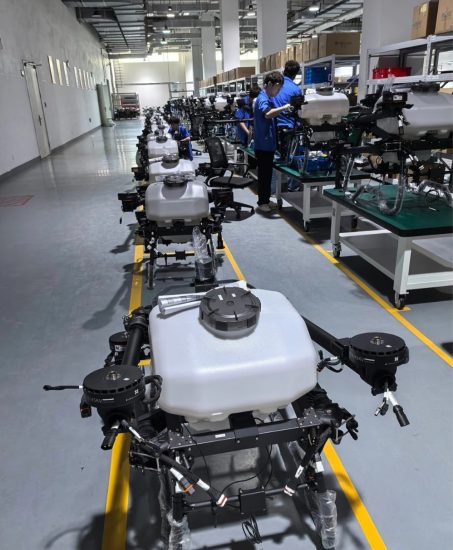


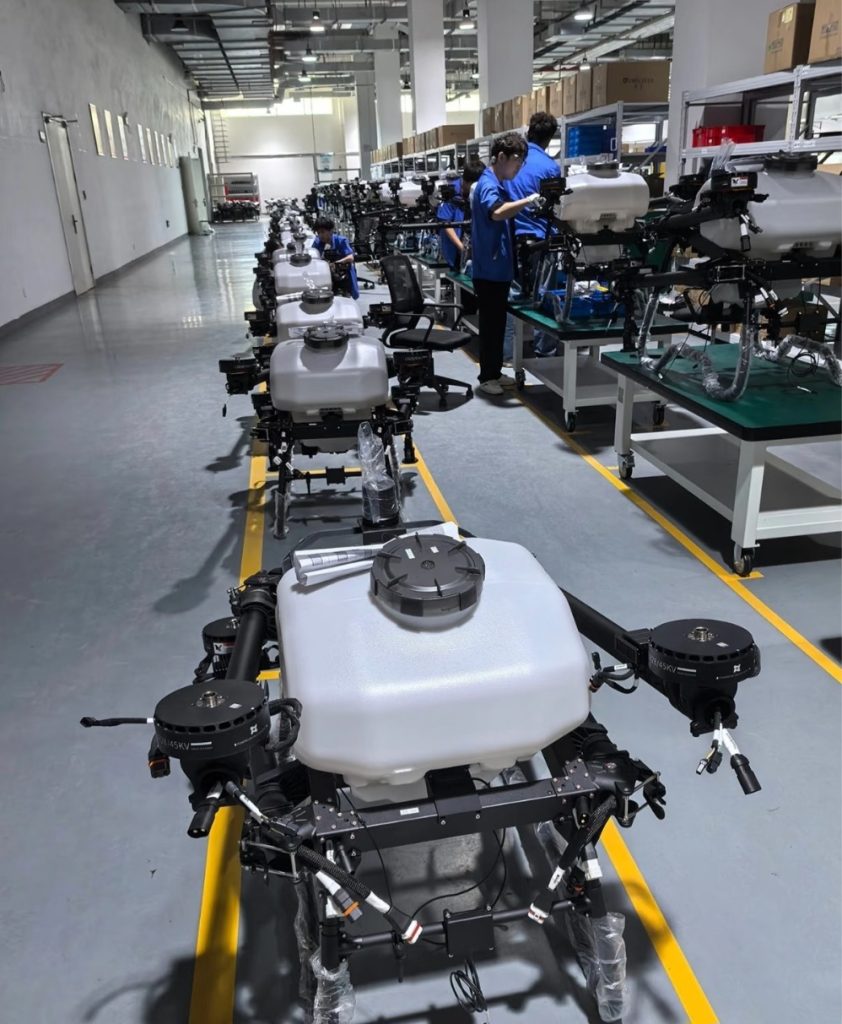
For global agricultural distributors, importers, and large-scale farming cooperatives, sourcing directly from a Swiss crop protection drone factory represents a strategic procurement decision that goes far beyond unit pricing. It is a choice to build your product line around engineered precision, regulatory readiness, and a legally protected manufacturing standard that carries weight in every major agricultural market.
This article examines what defines a Swiss crop protection drone factory, how OEM agricultural sprayer UAV partnerships with Swiss manufacturers work in practice, and what global buyers should evaluate before signing a distribution or private-label agreement.
What Makes a Swiss Drone Factory Different
A Swiss crop protection drone factory operates under a fundamentally different set of constraints and expectations than high-volume manufacturing facilities in low-cost regions. These differences are not cosmetic — they are structural, and they directly affect the product you receive.
The “Swiss Made” Legal Framework
In Switzerland, the “Swiss made” designation is governed by federal law (the Ordonnance sur l’utilisation du nom “Suisse”). To legally apply this label to an agricultural UAV, a manufacturer must prove that:
-
A substantial portion of production costs (typically 60% or more for industrial goods) originate in Switzerland
-
The final stage of manufacture takes place on Swiss soil
-
The essential manufacturing steps that give the product its distinctive character are performed in Switzerland
For a distributor, this is not a branding exercise. It is a procurement safeguard. The “Swiss made” label cannot be self-declared or purchased — it is auditable, enforceable, and legally defended. When your product carries this designation, your end customers know they are buying a platform whose component sourcing, assembly quality, and testing protocols have been verified by Swiss authorities.
Quality Management Under Swiss Standards
Swiss manufacturing facilities operate under ISO 9001 quality management systems as a baseline, but the cultural expectation of precision goes deeper. In a Swiss drone factory, every production batch undergoes:
-
Dimensional inspection of carbon fiber airframe components using coordinate measuring equipment
-
Static and dynamic balance testing of all rotating assemblies (propellers, motors, pumps)
-
Flight controller calibration against known reference signals before installation
-
Spray system validation — each pump and nozzle combination is flow-tested at multiple pressure settings
-
Full-system functional testing — every drone completes a tethered test flight with live spray system activation before shipment
This level of pre-shipment verification means that a drone arriving at your facility is not merely “assembled” — it is validated as a complete, flight-ready system.
Clean Electric Manufacturing Environment
Unlike factories that produce gasoline-powered agricultural equipment, a Swiss crop protection drone factory is designed around clean electric propulsion systems. The production floor is organized for:
-
Electrostatic discharge (ESD) protection in flight controller and electronics assembly areas
-
Climate-controlled battery formation and testing rooms
-
Dust-free spray system calibration booths
-
Dedicated chemical-resistant material testing labs
This manufacturing environment directly translates to product reliability. Electronic components that are handled in ESD-protected conditions fail less frequently. Batteries that undergo controlled formation cycles deliver more consistent cycle life. Spray systems that are calibrated in controlled conditions arrive at your customer’s farm ready to work on day one.
OEM Agricultural Sprayer UAV from Switzerland: How It Works
For distributors and importers, an OEM partnership with a Swiss crop protection drone factory typically follows one of three models. Understanding these models helps you choose the right structure for your market.
Model 1: White-Label / Private Label OEM
The Swiss manufacturer produces the drone under its own engineering and quality systems, but the product is delivered with your branding, color scheme, and packaging. This model is ideal for distributors who want to build a recognizable brand in their home market without investing in R&D or manufacturing infrastructure.
What the Swiss factory provides:
-
Complete UAV hardware (airframe, propulsion, flight controller, spray system)
-
RTK positioning module and ground control station software
-
CE, FCC, UN38.3, and MSDS certification documentation
-
Branded user manuals, quick-start guides, and training materials in your language
-
Spare parts catalog and recommended inventory list
What you provide:
-
Your brand name, logo, and color specifications
-
Target market regulatory requirements (beyond baseline CE/FCC)
-
Local language translation of documentation
-
After-sales service infrastructure in your territory
Model 2: Custom Configuration OEM
The base platform is Swiss-engineered, but the configuration is adapted to your market’s specific needs. This might include:
-
Tank capacity adjustments — scaling from 10L to 30L payload to match local farm sizes
-
Nozzle array customization — optimizing for local crop types (e.g., denser nozzle spacing for rice, wider spacing for orchards)
-
Battery configuration — hot-swap vs. parallel charging systems based on local power infrastructure
-
Software localization — field boundary tools adapted to local mapping conventions, multi-language GCS interface
-
Communication protocol alignment — ensuring compatibility with local agronomic data platforms
This model requires deeper collaboration between your technical team and the Swiss factory’s engineering department, but it produces a product that is genuinely differentiated in your market.
Model 3: Co-Development / Joint Product
For large distributors or national cooperatives, the Swiss factory may agree to develop an entirely new platform tailored to a specific agricultural system. This is the highest-commitment model, typically involving:
-
Joint investment in R&D
-
Exclusive distribution rights for a defined territory and timeframe
-
Shared intellectual property agreements
-
Phased development with pilot deployments before full production
Technical Capabilities of a Swiss OEM Agricultural Sprayer UAV
Whether you choose white-label, custom configuration, or co-development, the core technical platform from a Swiss factory is built around the same engineering principles:
RTK Positioning as Standard, Not Optional
Every Swiss-manufactured crop protection UAV integrates RTK as a core system, not an aftermarket add-on. The positioning module is:
-
Factory-calibrated against known reference points
-
Integrated with the flight controller at the firmware level
-
Validated during the tethered test flight before shipment
-
Documented with calibration certificates included in the shipping package
Centrifugal Spray System with Closed-Loop Flow Control
The spray system is designed as an integrated subsystem, not a retrofitted component:
-
Centrifugal nozzles produce uniformly sized droplets (adjustable from 50–300 microns)
-
Flow sensors provide real-time feedback to the flight controller
-
Application rate is maintained in liters per hectare regardless of flight speed variations
-
Individual nozzle control allows for section-based spraying (turning off nozzles over non-crop areas)
Modular, Serviceable Architecture
Swiss OEM UAVs are designed for field serviceability:
-
Quick-release arms with tool-free locking mechanisms
-
Hot-swappable battery bays with visual and audible connection confirmation
-
Standardized connectors throughout (no proprietary, single-source components)
-
Spare parts organized into tiered kits (essential, standard, comprehensive) based on MTBF data
Open-Architecture Flight Control
Many Swiss manufacturers use open-source flight control frameworks (such as PX4) rather than closed, proprietary systems. This provides:
-
Full access to flight logs and telemetry data
-
No vendor lock-in for software updates or maintenance
-
Ability to integrate with third-party agronomic platforms
-
Transparent, auditable code — increasingly important for government and cooperative buyers
What Global Buyers Should Evaluate Before Partnering
Sourcing OEM agricultural sprayer UAVs from Switzerland requires a different due diligence process than buying off-the-shelf from a trading company. Here is what to assess:
1. Manufacturing Capacity and Lead Times
Swiss factories prioritize quality over volume. Ask:
-
What is the current monthly production capacity?
-
What is the typical lead time for a 50-unit order?
-
Is production scalable during peak season (March–July in the Northern Hemisphere)?
-
What is the factory’s track record for on-time delivery?
2. Certification Portfolio
Request copies of all relevant certifications:
-
CE marking (EMC + RED directives)
-
FCC Part 15B (North America)
-
UN38.3 and MSDS (battery transport)
-
ISO 9001 certificate
-
Any local certifications for your target market
3. OEM Minimum Order Quantities (MOQ)
Swiss manufacturers typically have higher MOQs than low-cost producers, reflecting the precision and labor intensity of Swiss production. Understand:
-
Standard MOQ for white-label OEM
-
MOQ for custom configuration
-
Whether sample orders (1–5 units) are available for market testing
-
Volume pricing tiers
4. Warranty and After-Sales Structure
Clarify:
-
Standard warranty period and what it covers
-
Whether the factory provides advance replacement for critical components
-
Regional service center partnerships or authorized repair network requirements
-
Training programs for your technical staff
-
Remote diagnostics capability via telemetry data
5. Intellectual Property Protection
For private-label partnerships, ensure:
-
Your brand and custom configurations are protected
-
The manufacturer will not sell your custom variant to competitors in your territory
-
Exclusive territory rights are clearly defined in the contract
-
Non-compete and non-disclosure agreements are in place
Why Distributors Choose Swiss OEM Over Low-Cost Alternatives
The unit cost of a Swiss-made agricultural sprayer UAV will be higher than a mass-produced alternative. The question is not whether the Swiss drone costs more — it does. The question is what that premium buys you in your market.
Factor |
Low-Cost Mass Production |
Swiss OEM Factory |
|---|---|---|
Unit price |
Lowest |
Premium |
Pre-shipment validation |
Basic functional check |
Full system test flight + calibration |
Certification documentation |
Often incomplete or generic |
Comprehensive, auditable, market-specific |
Spare parts availability |
Unpredictable lead times |
Tiered kits, guaranteed stock |
Software transparency |
Closed, proprietary |
Open-architecture, data-portable |
Regulatory defensibility |
May face import restrictions |
Pre-cleared for major markets |
Brand positioning |
Competes on price alone |
Competes on quality, precision, compliance |
Long-term parts support |
1–2 years typical |
5–7 years typical |
For distributors selling into Europe, North America, Australia, and increasingly regulated markets (Brazil, Middle East, Southeast Asia), the Swiss OEM model provides a defensible competitive position. Your customers are not buying the cheapest drone — they are buying a certified, supported, precision crop protection system with a known regulatory pathway.
Frequently Asked Questions
Q: What is the typical lead time for an OEM order from a Swiss crop protection drone factory?
A: For white-label configurations, lead times typically range from 4 to 8 weeks depending on order volume and current production load. Custom configurations may require 10 to 14 weeks for initial tooling and calibration. Sample orders of 1–5 units can often be delivered within 2–3 weeks.
Q: Can a Swiss OEM agricultural sprayer UAV be customized for my local crop types?
A: Yes. Swiss manufacturers routinely adapt nozzle arrays, tank capacities, spray boom geometry, and flight controller parameters for specific crops — including rice, vineyards, orchards, coffee, tea, and row crops. Provide your local agronomic requirements, and the factory engineering team will propose a configuration.
Q: Does the “Swiss made” label apply to OEM / private-label products?
A: It depends on the agreement. If the Swiss factory performs the essential manufacturing steps and the production cost threshold is met, the label can be applied even with your branding. This must be negotiated contractually and verified with the relevant Swiss authorities.
Q: What certifications come standard with a Swiss-manufactured crop protection drone?
A: At minimum: CE marking (EMC + RED), UN38.3 battery certification, MSDS documentation, and ISO 9001 manufacturing certification. FCC (North America), RCM (Australia/New Zealand), and other regional certifications can be added based on your target market.
Q: How does the Swiss factory handle spare parts for international distributors?
A: Most Swiss manufacturers provide a recommended spare parts inventory list based on MTBF (Mean Time Between Failures) data. Critical components — propellers, nozzles, pumps, batteries, flight controllers — are stocked at the factory and can be shipped globally within 48–72 hours. Many factories also support regional spare parts depots for high-volume distributors.
Q: Is RTK base station hardware included, or is NTRIP network correction sufficient?
A: Both options are available. A dedicated RTK base station provides the most reliable correction signal in remote agricultural areas with poor cellular coverage. NTRIP network correction works well in regions with established CORS (Continuously Operating Reference Station) networks. Swiss factories typically support both and will advise based on your operating environment.
Q: What training does the Swiss manufacturer provide for distributor technicians?
A: Training programs typically include: factory-level technical training (3–5 days at the Swiss facility), remote video-based diagnostics training, and on-site training for large distributor networks. Certification is issued upon completion, and refresher courses are provided with each major firmware or hardware update.
Q: How does a Swiss crop protection drone compare to Asian brands in terms of total cost of ownership?
A: While the upfront unit cost is higher, Swiss UAVs typically deliver lower total cost of ownership through: longer service life (5–7 years vs. 2–3 years), fewer in-season failures, lower chemical waste (RTK precision), and stronger residual value. For professional operators who depend on the drone for revenue generation, the Swiss platform often proves more economical over a 3–5 year horizon.
Conclusion
Partnering with a Swiss crop protection drone factory for OEM agricultural sprayer UAVs is not the lowest-cost path — and it is not meant to be. It is the highest-assurance path for distributors who need a product that will pass regulatory scrutiny, perform reliably in the field, and support a premium brand position in their home market.
The Swiss manufacturing ecosystem — from legally protected quality standards to open-architecture flight control to comprehensive certification documentation — exists for one purpose: to produce crop protection UAVs that work exactly as specified, every time, in every condition. For distributors building a long-term business in precision agriculture, that assurance is not a luxury. It is the foundation of everything else.
About Swiss OEM Agricultural Sprayer UAVs: This article is written for global agricultural distributors, importers, and procurement professionals evaluating OEM partnerships with Swiss crop protection drone manufacturers. All technical and regulatory references reflect industry-standard practices for Swiss precision UAV manufacturing. For OEM program details, certification portfolios, or distribution agreements, contact a verified Swiss agricultural drone factory directly.
THE END


No comments yet