

In the competitive landscape of industrial and commercial automation, the conversation has shifted. For years, the focus was on payload capacity, cycle times, and repeatability. As a foreign trade sales specialist in humanoid robotics, I have watched the market evolve. Today, the most pressing question from procurement officers and COOs is no longer “How strong is it?” but rather “How smart is it?” Specifically, they want to know: “Can it understand us?”
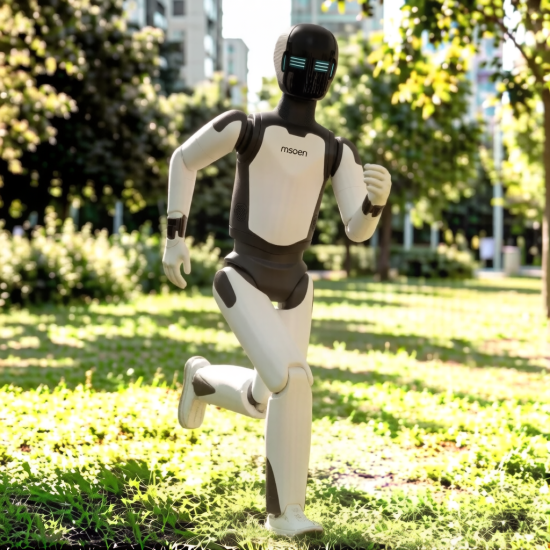
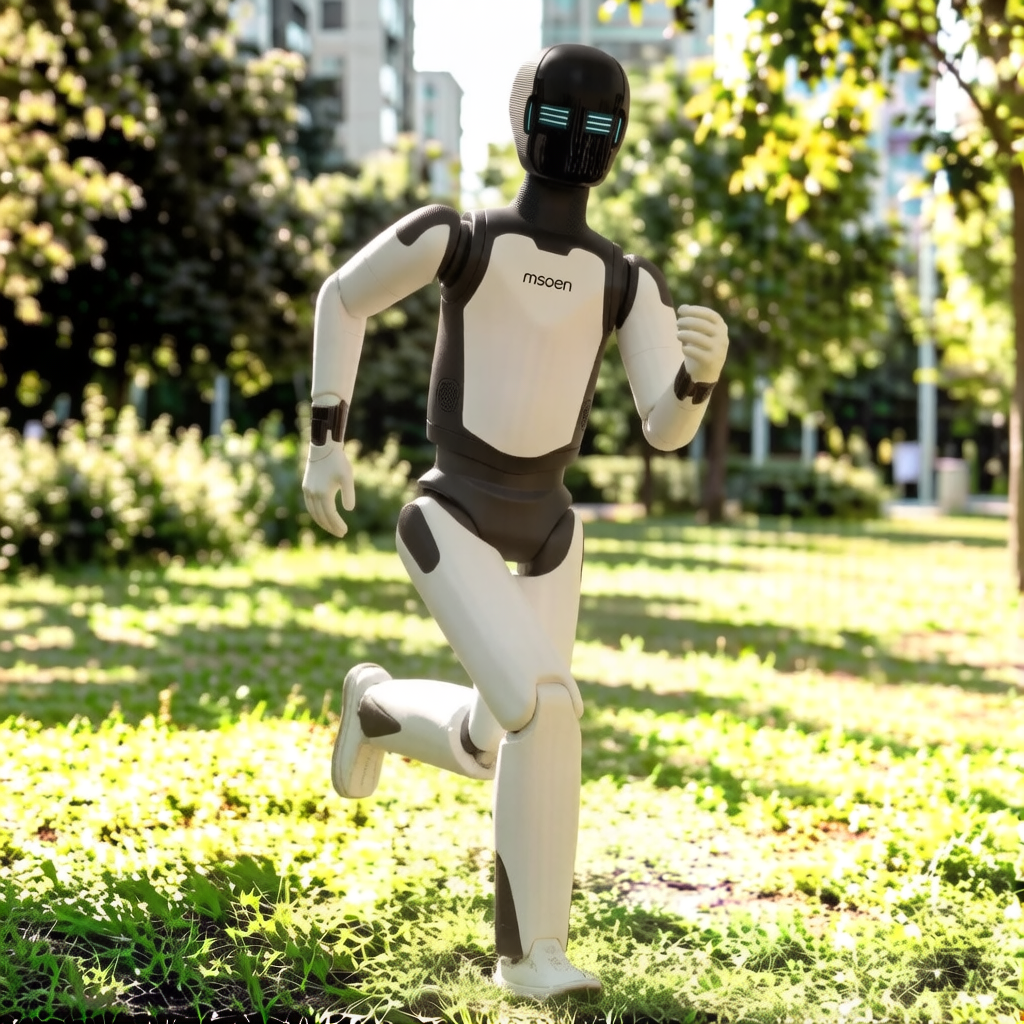
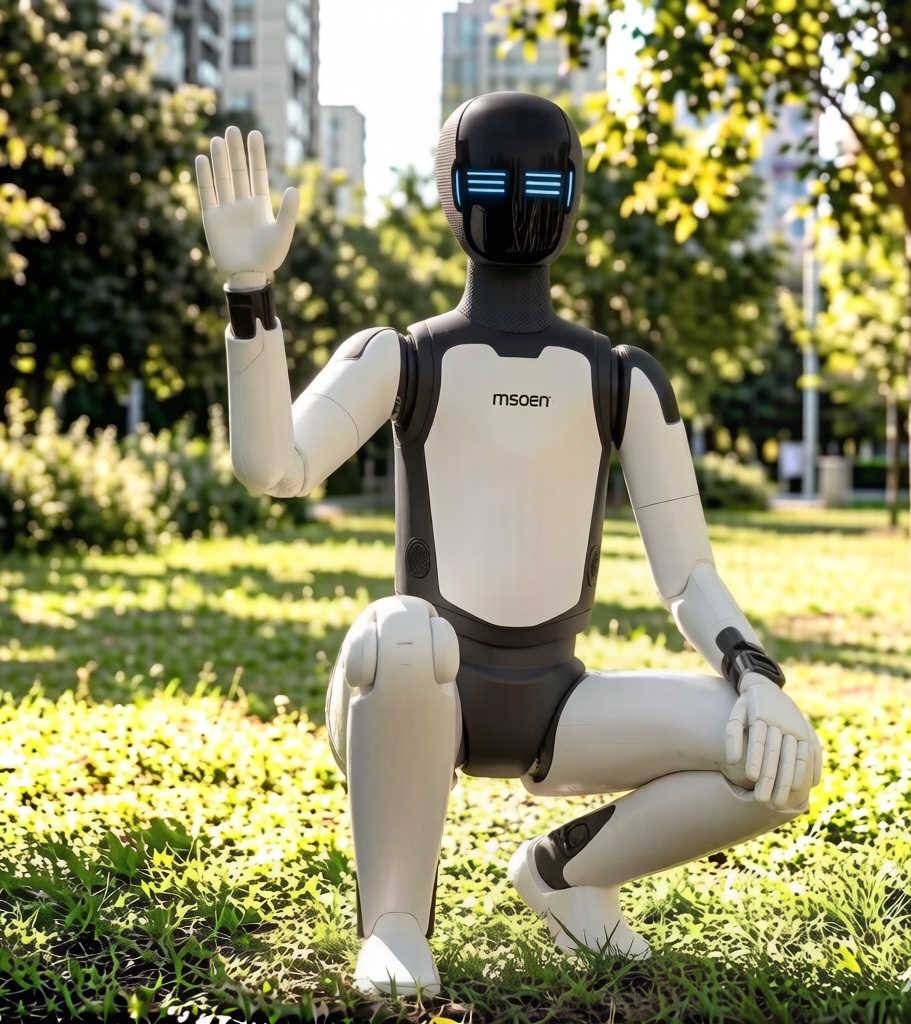
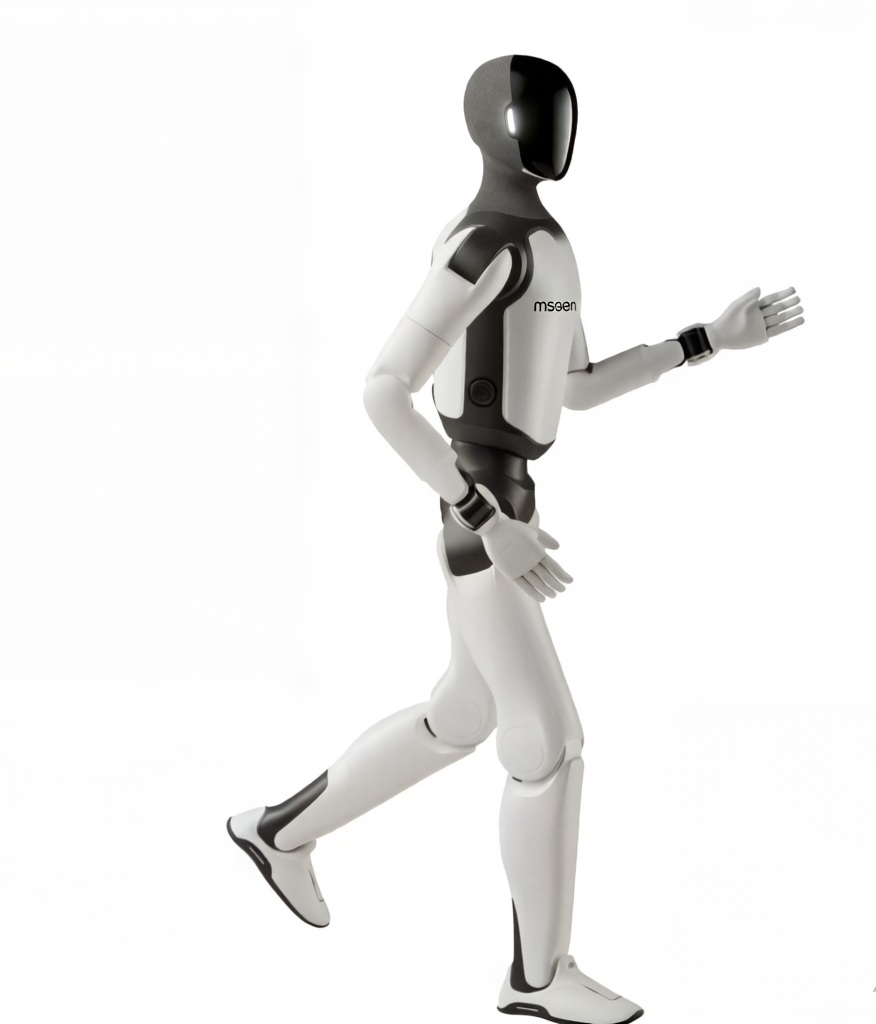
This is the core principle behind our flagship product: the AI-Powered Humanoid Robot with Advanced Natural Language Processing. We have moved beyond the era of rigid, script-based interactions. Our robots are designed to be collaborative partners, capable of engaging in dynamic, context-aware dialogue that transforms workplace efficiency.
The Paradigm Shift: From Programming to Conversation
Traditional industrial robots are deaf and dumb. They follow pre-set paths and respond only to binary signals. Even modern service robots often rely on “keyword spotting”—a frustrating experience for users who must memorize specific phrases like “Hey Robot, Go to Reception.”
Our approach is different. We have integrated a sophisticated Large Language Model (LLM) architecture directly into our humanoid platform. This allows the robot to process natural, conversational language. You don’t need to talk to a machine; you talk with a colleague.
Key Technological Pillars:
-
Contextual Retention: The robot doesn’t treat each sentence as a new query. It remembers the context of the conversation. For example, if a technician asks, “What is the torque setting for the M12 bolt?” and then follows up with, “And what about the M14?”, the robot understands the reference to torque settings without needing to be asked again.
-
Multi-Intent Recognition: In a busy environment, requests are rarely singular. Our NLP engine can parse complex sentences. A user might say, “Check the inventory for Part #456 and tell John in Maintenance that the conveyor is running slow.” The robot identifies two distinct intents and executes both actions sequentially.
-
Noise-Canceling Voice Intelligence: Factory floors and warehouses are loud. Our proprietary audio pipeline uses beamforming microphones and deep learning noise suppression to isolate the speaker’s voice from ambient machinery, ensuring high accuracy even at 85dB.
Applications Across Industries
The versatility of this technology opens doors to new applications:
-
Smart Manufacturing: Operators can verbally request schematics, report defects, or adjust machine parameters without taking their hands off their work.
-
Executive Offices & Reception: The robot serves as a multilingual concierge, handling visitor check-ins, answering complex HR policy questions, and directing guests with polite, brand-aligned conversation.
-
Research & Development: Universities and labs use the robot as a platform to develop their own AI models, leveraging our open SDK to experiment with social robotics and cognitive computing.
Frequently Asked Questions (FAQ)
In my role, I engage with technical directors and purchasing managers daily. Here are the most critical questions I receive regarding our AI and NLP capabilities, along with answers based on real-world deployment experience.
1. How is your NLP different from a standard smart speaker or Alexa?
While consumer devices are optimized for short commands in quiet homes, our NLP is industrial-grade. The key differences are:
-
Domain Adaptation: We pre-train our models on industrial and commercial datasets (technical manuals, safety protocols, logistics terminology).
-
Far-Field Performance: Our microphone array and echo cancellation are designed for 5-10 meter interaction ranges in reverberant rooms.
-
System Integration: Our robot can trigger physical actions (like opening a door or starting a motor) based on the conversation, whereas consumer devices are limited to internet searches or smart home controls.
2. Can the robot understand accented English or non-native speakers?
Yes, this is a major selling point. We trained our acoustic model on a diverse dataset of global English accents (Indian, Chinese, German, etc.). During onboarding, we run a brief calibration session where your team speaks a few phrases. The AI adapts its phonetic model to better recognize the specific vocal patterns of your staff, improving accuracy over time.
3. What are the latency requirements for real-time conversation?
Latency is critical for a natural feel. In cloud-connected mode, response times average 300-500ms. However, for mission-critical environments where every millisecond counts, we offer an Edge Computing Module. This processes the NLP locally on the robot’s GPU, reducing latency to under 100ms, effectively making the conversation feel instantaneous.
4. How do you handle “hallucinations” in the AI model? (i.e., making things up).
This is a valid concern with LLMs. We mitigate this through Retrieval-Augmented Generation (RAG). The robot does not rely solely on its internal training. When asked a factual question about your company, it first retrieves verified documents from your private knowledge base (uploaded via our secure portal). It only answers based on this data. If the information isn’t there, it says, “I don’t have that information,” rather than guessing.
5. What is the process for updating the robot’s knowledge base?
It is designed for non-technical users. We provide a web-based dashboard. You simply drag and drop PDFs, Word docs, or Excel sheets (like employee handbooks or parts catalogs). The system automatically chunks, embeds, and indexes this data. Updates typically take effect within minutes without requiring a reboot of the robot’s core OS.
6. Is the voice interaction always listening? How do we ensure privacy?
Privacy is built into our hardware. The robot features a physical “Privacy Switch” that disconnects the microphones entirely. Furthermore, the wake-word detection (“Hey [Robot Name]”) is processed locally. Audio is only streamed for processing after the wake word is detected. You can also configure it to require a button press for activation instead of voice.
7. Can we customize the robot’s personality and voice?
Absolutely. We offer a “Brand Voice” toolkit. You can choose from several base voices (male/female/neutral) and adjust parameters like pitch, speed, and formality. For premium projects, we offer voice cloning services where we can synthesize a unique voice for your brand, provided you have the legal rights to the source audio.
8. What happens if the Wi-Fi drops during a critical task?
Our system uses a hybrid architecture. The heavy NLP lifting is done in the cloud, but we cache essential commands and local knowledge on the device. If connectivity is lost, the robot will switch to a “Local Mode,” where it can still perform its programmed routines and answer basic FAQs stored locally. It will notify the user: “I am currently offline, but I can still assist with basic tasks.”
Implementation and Support
Deploying an AI-powered humanoid is a strategic investment. We support our partners through every step:
-
Phase 1: Discovery. We analyze your workflow to identify high-value interaction points.
-
Phase 2: Data Ingestion. We help you structure your company data for the RAG system.
-
Phase 3: Pilot Program. We recommend a 30-day trial in a controlled environment to train the staff and the AI.
-
Phase 4: Scaling. Full deployment with ongoing firmware updates and model improvements.
Conclusion
The future of automation is not about replacing humans; it is about augmenting them with intelligence. Our AI-Powered Humanoid Robot with Advanced NLP is more than a tool—it is a communicative partner that understands your business language.
If you are ready to move from buttons and screens to the simplicity of conversation, I invite you to schedule a technical deep-dive with our team. Let’s build the future of work together.
THE END


No comments yet